BIA update – 2 February 2026
What an incredible night! Last Thursday, we welcomed a record 780 of you to the Roundhouse for the 2026 BIA Gala Dinner. It was a powerful reminder of the strength, resilience and sheer brilliance of our community.
Between the networking and the celebrations, we raised vital funds for our new charity partner, Muscular Dystrophy UK. A heartfelt thank you to Louisa Hill for sharing her son’s moving journey; it was a poignant reminder of the patients at the heart of everything we do.

Jane Wall
Managing Director, BIA
Gala Dinner 2026
Celebrating Ruth McKernan
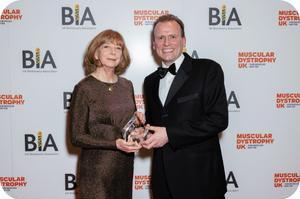
This year, we were proud to present the inaugural David Chiswell Lifetime Achievement Award. It was only fitting that the first recipient be Ruth McKernan. As a neuroscientist, entrepreneur, investor and former Chair of the BIA, Ruth has been a real force in our sector. More recently, her work co-founding companies like Draig Therapeutics – featured in our 2025 biotech financing report – Alchemab and AstronauTx (all recently featured as Sunday Times "Future Stars") exemplifies the entrepreneurial journey we champion as BIA. Ruth, thank you for your steadfast commitment to UK biotech and your kind words about the BIA’s role in championing the sector.
Policy pledges from the Secretary of State
We were honoured to welcome The Rt Hon Liz Kendall MP, Secretary of State for Science, Innovation and Technology, as our guest of honour at the Gala Dinner. Her message to the room was clear: "There is no path to stronger growth in this country without our brilliant British life sciences being front and centre."
The Secretary of State backed this sentiment with significant commitments, announcing a 10-year guarantee for the MRC Lab for Molecular Biology in Cambridge, with the first year seeing a £50 million investment. She also confirmed a dedicated budget of £1.5 billion for life sciences R&D over the next four years and an end to short-term funding cycles. Liz went on to highlight the Government's intent to unlock British wealth for innovators via the Mansion House Accord and the Pension Schemes Bill, alongside a vital commitment to clinical trial speed, targeting a 150-day turnaround from proposal to patient enrolment. It was encouraging to hear explicit and long-term commitments to the sector.
BIA are very proud to have our priorities well embedded in the Life Sciences and Digital and Technologies Sector Plans. As I outlined on Thursday, 2025 was the plan, and in 2026 will be looking forward to collaborating with government and our members to ensure delivery.
BIA and Kate Bingham showcase life sciences to pensions industry
Building stronger links between our sector and the pensions industry is one of those core priorities highlighted by BIA and now incorporated in Industrial Strategy. Last Thursday, Martin Turner, our Director of Policy and External Affairs, and Kate Bingham hosted a session on the topic at the SG Pensions Enterprise Private Markets Pensions Investment Forum.
Kate set out the incredible opportunity of UK life sciences to an audience of pension fund professionals, including many of the Mansion House Accord signatories. The Mansion House Accord is a fantastic opportunity to secure greater investment for the development of new medicines and ensure the financial returns are captured in the UK, including by pension savers – but we urgently now need this opportunity to deliver for the sector.
The great news was that, when surveyed on the spot at the conference, 40% of the audience considered life sciences to be the biggest opportunity for private market investing!
Quantifying the hidden cost of rare diseases
The Gala Dinner also provided a fantastic launchpad for our 2026 partnership with Muscular Dystrophy UK, where Louisa Hill spoke movingly about how her son’s duchenne muscular dystrophy had affected their family. We are looking forward to joining forces with MDUK this year to really highlight the challenges of rare disease conditions and the urgency around bringing more therapies through the pipeline. The socioeconomic impact of rare conditions is often overlooked – something addressed in a new blog by Emily Klein, our Senior Policy and Public Affairs Executive, exploring research commissioned by the BIA’s Rare Disease Industry Group (RDIG) and conducted by Costello Medical. The findings are staggering: the socioeconomic burden of a rare condition in the UK is estimated at approximately £70,000 per patient per year—eight times higher than common conditions like diabetes or cancer.
Collectively, this equates to an annual cost of roughly £200 billion to the UK economy, much of which is driven by "hidden" costs like lost productivity and caregiver burden that are not currently captured in NICE's QALY-based assessments. As we move through 2026, a crucial year for the UK Rare Diseases Framework, we will continue to advocate for evolving these appraisal frameworks to reflect the full spectrum of clinical, social and economic benefits that transformative treatments bring to the 3.5 million people in the UK living with a rare condition.
LeaP
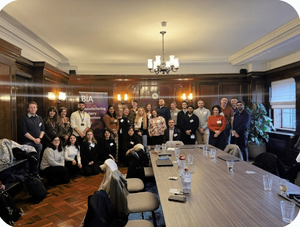
It was wonderful to see the kick off of LeaP’s ninth cohort last Wednesday! The programme has brought together 190 LeaPers from 52 organisations in total. LeaP is designed to empower emerging leaders in bioprocessing with the skills, confidence and connections to accelerate their careers. Through peer-to-peer networking, site visits and knowledge sharing, as well as mentorship and “lunch and learn” sessions from industry leaders, participants gain the practical tools and insight needed to lead effectively in a rapidly evolving sector. Really looking forward to seeing these future leaders connecting with each other and with the wider BIA ecosystem as their careers develop.
3Rs in action: bridging the gap between policy and practice
Animal testing is once again on the agenda and I encourage you to join our upcoming webinar for a well-informed and forward looking discussion "3Rs in action: bridging the gap between policy and practice." Ethical research is the foundation of scientific excellence, and the 3Rs approach of “replace, reduce and refine” is a useful framework for the sector. The webinar will feature insights from the NC3Rs and real-world case studies from AstraZeneca on how to implement these strategies within a global R&D framework.
Amicus brief to EBA G1/25
BIA members are highly research-intensive and operate in a global innovation ecosystem where effective, predictable and proportionate patent protection is critical to supporting continued investment. We have responded to referral G1/25 to the Enlarged Board of Appeal (EBA) to push back against proposals to mandate companies to amend their own patents to align with allowed or granted claims. The outcome will directly affect the cost, risk profile and legal certainty of European patent protection for life sciences innovators.
We argued that, from the perspective of BIA members, this imposes significant and unjustified costs and introduces unnecessary risks. We believe it would disproportionately and unfairly impact the life sciences sector, which is already burdened with exceptional technical and legal complexity.
BIA's IPAC leads the BIA’s IP policy development, helps shape the environment for IP ownership and ensures strong IP protection is available for member companies.