Lab bench to front bench: June roundup
In this edition:
- An update on our influence activity in June.
- A spotlight on BIA advocacy to ensure strong IP protection is available for member companies and the wider biotech sector.
- What we've been reading and listening to.
-
What's coming up across BIA Policy and Public Affairs.

Linda Bedenik, Head of Biosolutions & International Policy, and Maddy Anderson, Senior Policy and Public Affairs Executive
Engagement with Government and Parliament
Another tranquil month in Westminster then with no drama whatsoever, save for the small matter of the Prime Minister resigning.
Sir Keir Starmer announced he will step down as Labour leader and Prime Minister once a successor is in place – with newly elected Makerfield MP Andy Burnham expected to stand unopposed. Nominations open on 9 July and close on the 16th; if unchallenged, Burnham becomes PM. He has already unveiled a sweeping 10-year platform built around a historic transfer of power out of Whitehall to drive local economic growth: custom devolved settlements and mayoral options for every UK region, key Number 10 functions relocated to Manchester and direct local control over regional infrastructure funds.
What this means for BIA members is the question now occupying our minds. Members can expect our exclusive analysis of Burnham's record on life sciences and how his premiership could reshape the landscape for the sector landing in your inboxes tomorrow.
Leadership contest notwithstanding, BIA’s policy influencing carried on at pace. Read on for where we've kept the wheels turning this month, while staying alert to the shifting picture at the top.
In case you missed it:
-
We kicked off the month with our annual Parliament Day, with a delegation of 35 member companies taking the sector's asks into a bumper programme of meetings across Parliament, Whitehall and into Number 10. Read the full breakdown here.
-
BIA helped shape the MHRA's first overhaul of gene therapy definitions since 2007. Responding to the consultation on modernising how gene therapy medicinal products are classified, BIA welcomed proposals that give developers greater clarity and align broadly with the EU. Drawing on member input, we pressed for illustrative examples to prevent unintended reclassification, a proportionate risk-based approach for newly captured products and clear transitional provisions, including a minimum 12-month implementation timeline.
-
BIA convened innovators, regulators and policymakers to push for pro-innovation regulation of GMMs. In partnership with the Environmental Biotechnology Innovation Centre (EBIC) and EuropaBio, our Brussels roundtable focused on genetically modified microorganisms (GMMs) designed for environmental release – a technology with potential across pollution remediation, soil health, agricultural productivity and industrial waste. The UK currently has no approvals for GMM’s deliberate release beyond limited research. With UK–EU SPS negotiations ongoing, the discussion opened a timely dialogue on where regulatory alignment could benefit both jurisdictions and identified practical areas for further collaboration.
-
New pilots to fast-track rare-disease and other medicines onto the NHS put into practice an approach BIA members have long championed. Announced by DHSC last week and developed by a joint government, industry and NHS taskforce, the schemes will test new approaches to pricing, access and adoption from September, delivering on the UK–US pharmaceutical arrangement - including enabling therapies to enter managed access without a full NICE appraisal, and valuing medicines' wider benefits such as helping people return to work. BIA welcomed the industry-government co-invention and encouraged the use of rare diseases as a pathfinder for new ways of evaluating and valuing innovative medicines.
-
At the BIO International Convention in San Diego, BIA helped put the UK front and centre on the world's biggest biotech stage, convening ministers, regulators and global capital around the sector's investment offer. Our CEO, Chris Molloy, chaired a fireside chat with new Health Minister Preet Kaur Gill and MHRA CEO Lawrence Tallon on the UK landscape: MHRA reform, faster trials, NICE expertise and the new MHRA–FDA liaison programme. The BIA–DBT UK reception for the convention hosted over 400 BIA members and guests across three days and showcased progress against the Life Sciences Sector Plan.
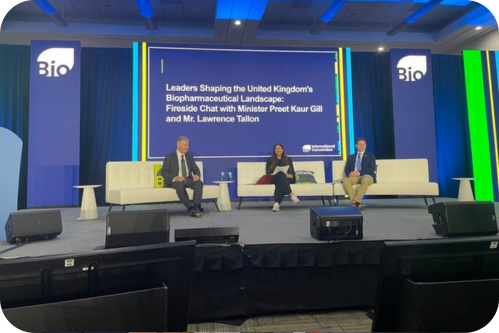
Leaders Shaping the United Kingdom’s Biopharmaceutical Landscape: Fireside chat with Minister Preet Kaur Gill and Lawrence Tallon -
Chris Molloy pitched the UK sector to international investors at the London Stock Exchange. The Government’s Office for Investment invited us to deliver a keynote alongside Science Minister Lord Vallance. Their pitching event brought 10 fast-scaling UK HealthTech and life sciences companies together with international investors. Chris drew on BIA data to argue that the UK doesn't just invent but approves drugs, builds companies and generates returns – and is now "one of the most stable regulatory environments on the planet," a case international capital needs to price in.
-
BIA pushed British Business Bank to deploy new capital faster. Our Director of Policy, Martin Turner, met with the Chair and Chief Investment Officer of the British Business Bank as part of a roundtable to discuss the bank’s Five-year Strategic Plan. We used the opportunity to call on them to speed up deployment of their significant new balance sheet into the sector.
-
As the MRC's new Pre-Clinical Translational Models Hub is designed, BIA secured SMEs an early voice. Backed by UKRI under the Life Sciences Sector Plan, the Hub is a national capability built to close one of medicines development's most stubborn gaps - turning promising lab models into validated, standardised tools that industry and regulators can actually trust to make decisions. With SME partnerships being shaped now, we convened a roundtable of member companies, drawing on survey responses gathered in advance to set out clear recommendations on keeping participation low-friction and commercially viable for smaller players — and to line up a cohort ready to engage as opportunities open up.
-
BIA's TechBio X event fed industry priorities directly into HDRS's emerging infrastructure. Bringing the TechBio community together at AstraZeneca's DISC building during Cambridge Wide Open Week, BIA spotlighted its Health data vision 2035 report and convened a panel discussion with Tom Lyle of the Health Data Research Service (HDRS), which surfaced practical steps for HDRS as it develops. Tom confirmed HDRS is seeking industry input ahead of an early-July open call for new driver projects and technical transformation pilots.
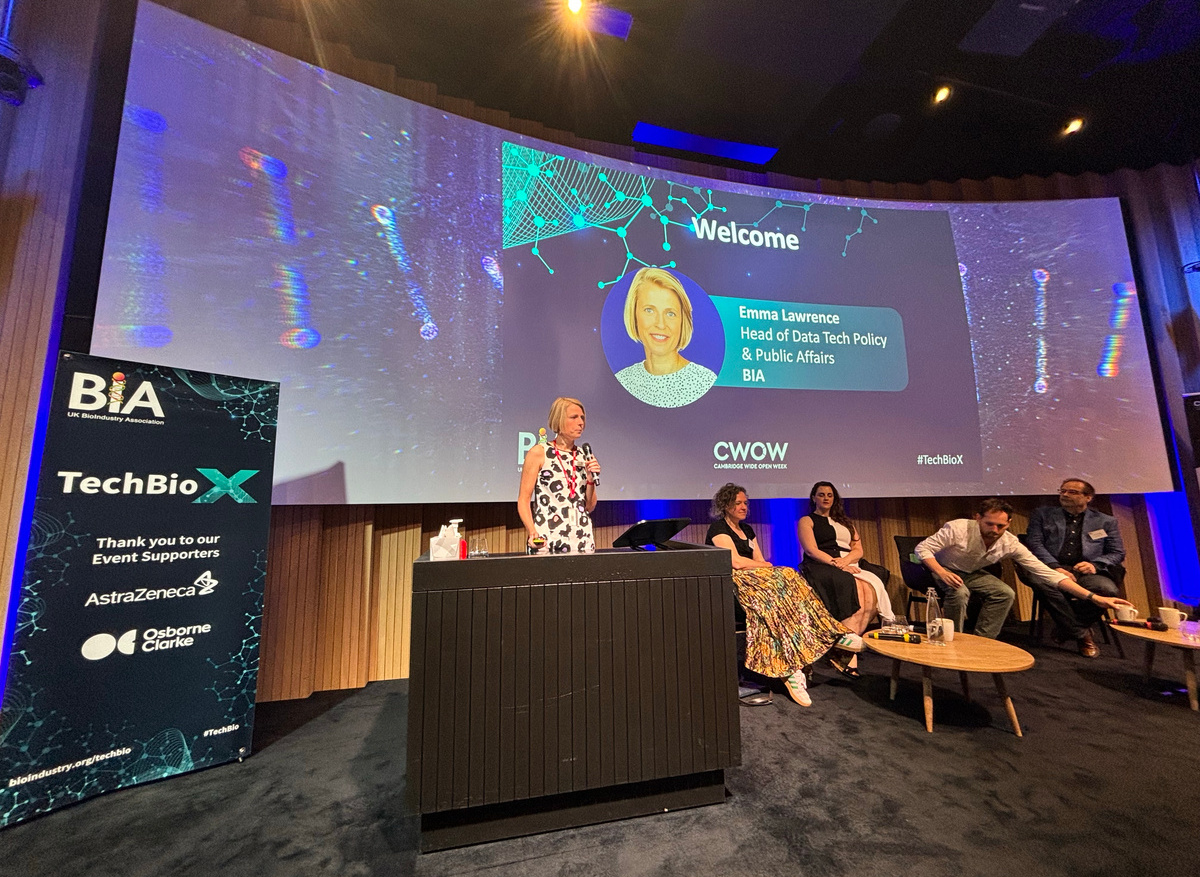
TechBio X Emma Lawrence welcome address
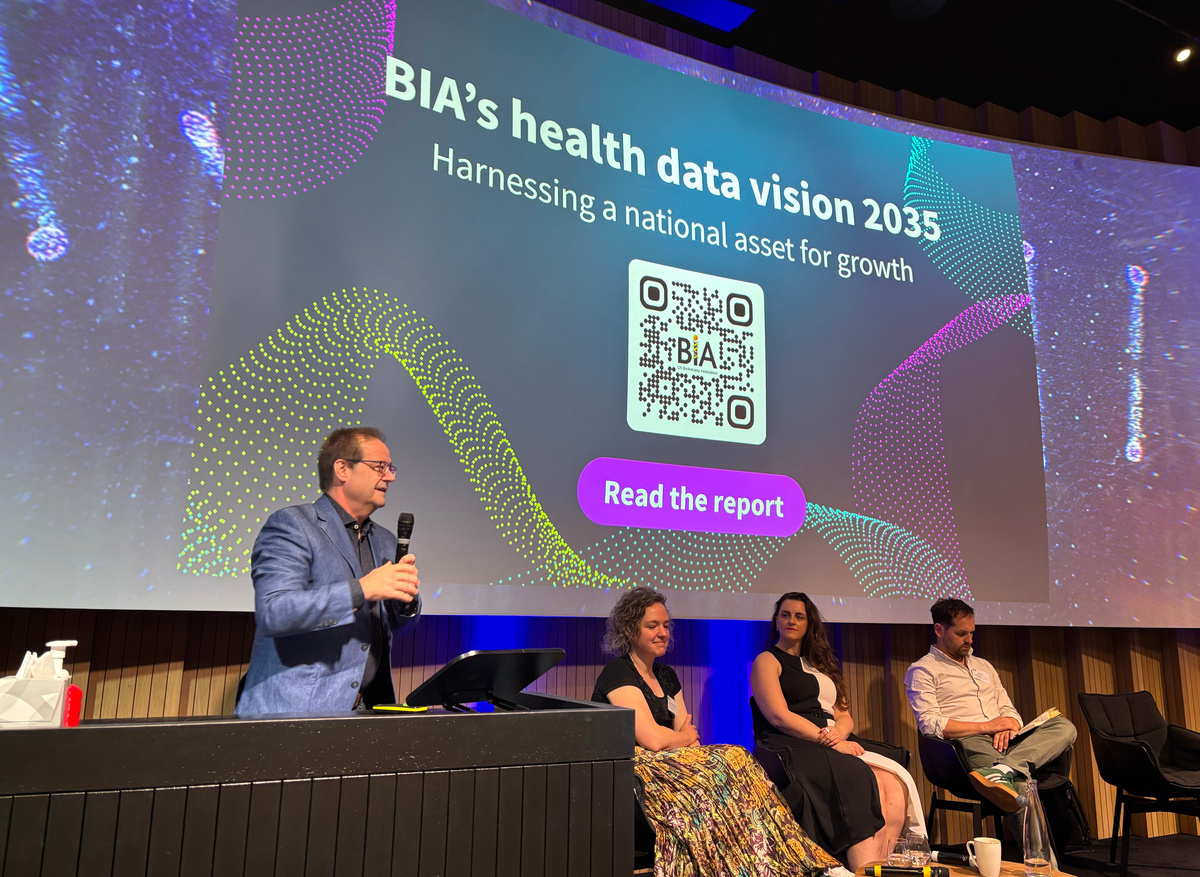
BIA’s health data vision 2035 report launch

TechBio X Emma Lawrence welcome address
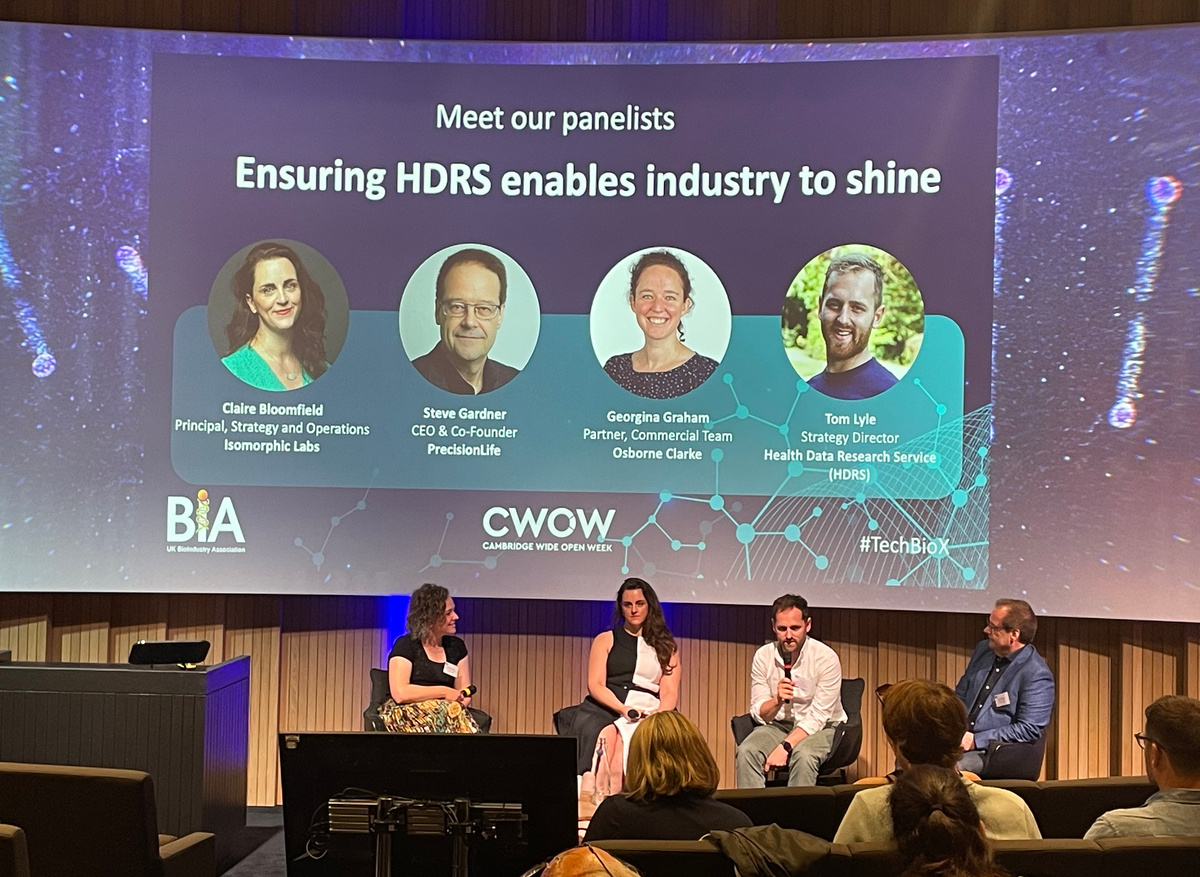
Ensuring HDRS enables industries to shine
Spotlight on Intellectual Property (IP) Policy
You probably know that securing and protecting IP is an essential activity for life sciences and biotech, as it makes private investment possible. What you may not know is that IP has been one of BIA’s longest-standing policy activities, dating back to the early 1990s.
BIA supports members by providing guidance on IP policy and advocating on behalf of the sector to the Government and relevant stakeholder organisations, such as the UK Intellectual Property Office (UKIPO) and the UK and European courts. From raising our concerns on the European Patent Office’s (EPO) antibody patenting hurdle, and weighing in on whether the EPO can require patent applicants to amend the description of their claims, to hosting the UK’s global IP attachés and defending IP rights in global agreements, we work to enable members’ abilities to predictably secure, implement and defend their IP rights and beyond.
Here is a snapshot of what we do to ensure strong IP protection is available for member companies and the wider biotech sector.
Placing biotech in the UK’s copyright and AI debate
A topic of much public and cross-sector debate has been the ongoing Government review of the UK’s copyright framework in the age of AI. It centres around where UK copyright law applies and whether AI developers are allowed to freely use copyrighted materials to train AI models. The life sciences sector, and TechBio companies in particular, sets itself apart from the creative industries and from AI firms that are at the centre of the debate. Not only because of the types of data being harnessed and produced by the sector, but the impact the use of data and AI can have on the development of novel therapeutics and the betterment of public health.
BIA has firmly established biotech our members' voices in the debate. Since the Government’s first consultations on the topic in 2020 and 2022, we have advocated for members’ needs, focusing on continued access to quality data and preference for a transparent opt-out system. This became the Government’s preferred policy option in early 2025.
Despite Government withdrawing from their preferred positioning in March 2026 due to continued public pressure, BIA's voice remains more important than ever as the only voice representing our sector in the debate. Working through the Copyright and AI Technical Working Group, a UK government‑led expert forum, we explore practical, workable solutions that balance protecting and rewarding rightsholders with ensuring techbio companies can access high‑quality content.
Looking ahead, BIA will continue to influence the next phase of policy development, ensuring that emerging frameworks safeguard the UK’s position as a leader in life sciences innovation. For members, this means ongoing representation at the highest levels of Government, continued advocacy for data access and a clear focus on securing a policy environment that enables growth, innovation and real‑world health impact.
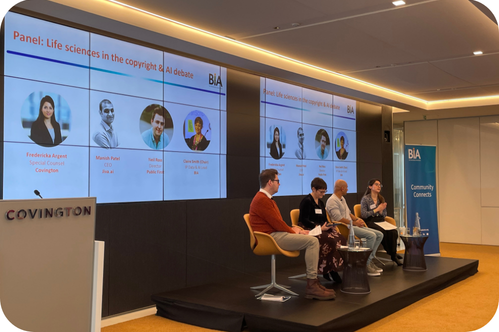
Members of BIA’s TechBio and IP communities in March disccusing the UK’s copyright regime
Securing fair use of genetic resources and sequence information
The development of global rules governing access to genetic resources, Digital Sequence Information (DSI) and pathogens with pandemic potential are in a critical phase, with new mechanisms under the Convention on Biological Diversity (CBD) and the WHO set to directly affect how biotech companies use (non-human) sequence data. As frameworks such as the Nagoya Protocol continue to create real‑world complexity for innovators and threaten to creep further into the global patent system – and newer mechanisms like the CBD’s Cali Fund and the WHO Pandemic Agreement’s Pathogen Access and Benefit Sharing (PABS) system take shape – BIA’s role is more important than ever to protect the biotech sector’s ability to innovate.
In successive CBD negotiations, we have ensured that the needs of the biotech sector are understood and recognised in the development of the DSI multilateral mechanism and the operationalisation of the Cali Fund – a pot of money companies are expected to contribute to in return for accessing DSI. We have secured a UK Government U-turn towards recognising the need for a voluntary, proportionate approach, influencing the UK’s shift away from a mandatory DSI mechanism ahead of COP16 in 2024 and reinforcing its current voluntary interpretation.
In the context of the WHO Pandemic Agreement, BIA has reinforced the importance of maintaining a voluntary framework and avoiding duplication with existing benefit-sharing obligations under the CBD. This has ensured that the realities of biotech R&D and manufacturing are reflected in UK negotiating positions as discussions on the Agreement continue towards 2027.
There is a continued and real risk that current voluntary mechanisms, particularly on DSI, could shift towards mandatory legislation if they are seen as ineffective. BIA’s engagement ensures that UK biotech companies, particularly innovative SMEs, have a strong voice in the global negotiations, rather than being disproportionately targeted within global benefit‑sharing frameworks.
This month's picks from the Policy and Public Affairs team
-
How the NHS can drive a northern life sciences boom - New Statesman. Makes the case for the NHS as an engine of regional life sciences growth.
-
UK-Wide Growth and Development: Insights from the 'Manchester Model' - The Productivity Institute. Timely context for the Burnham era: how Greater Manchester's devolution settlement has shaped local growth, and what extending the model nationwide could mean.
-
PrecisionLife launches podcast exploring the future of healthcare and how to solve chronic disease. A new podcast from BIA member PrecisionLife on rethinking how we tackle chronic disease.
-
House of Commons Library briefing on the UK–US pharma deal. A clear, non-partisan primer for anyone wanting to get up to speed on the agreement.