
CEO blog: our asks ahead of Wednesday’s Budget; what Q3 biotech numbers tell the Chancellor; join our Budget webinar

Chris Molloy
CEO, BIA
Dear colleagues,
Let me start with a clear Monday message for our Chancellor ahead of Wednesday’s Budget.
The life sciences sector epitomises the Prime Minister’s vision of an Innovation Nation and we share its goals. The sector can be an engine of growth and prosperity, and it knows where the keys are.
Right across the four nations of the UK, entrepreneurs are assembling science-driven start-ups. Private investors and public sector support are helping some of them accelerate, but this is inconsistent across the sector and the country. Global money is then picking the best, often to be headquartered, commercialised and adopted elsewhere, meaning Britain doesn’t benefit from either their economic or health benefits.
Our Q3 finance report, out today, shows UK biotech has raised £2.8 billion in venture capital so far this year, more than in any full year since 2022. But too few British investors are taking part, so too little of the return stays here.
A successful life sciences sector will be the indicator of a successful nation: confident and globally competitive, from north to south, east to west. We are therefore pleased to see the Chancellor say that the Budget will support our calls to back “bloody-minded entrepreneurs” with enhanced tax reliefs and that the British Business Bank will have greater power to fuel the scalable businesses they create. This directly reflects what we called for in our Budget submission. We have proposed cost-efficient solutions that will enable the UK to capture the full benefits of our life science heritage and these public sector investments.
In addition to what has been announced, the Government must bring forward and inject pre-allocated UKRI stimulus funding with industry-standard decision making to form a national pipeline of fit to fund companies. It must boldly direct our financial institutions to back the UK’s high value biotechs with long term capital, with or through BBB, for the benefit of our patients and pensioners. This must be complemented through focussing fiscal incentives upon the eight strategic sectors of the Industrial Strategy and rewarding entrepreneurs for reinvesting the profits of that success. And we need to adopt the innovations – medicines and other technologies – that investment creates, with fair pricing and care for those facing unmet medical needs.
This cannot wait for action in two years. We have a national sector plan waiting to be delivered. The machinery of government has been changed to drive it. But machines only deliver when they are fuelled and when you push the accelerator. The sector voice is clear. It is time to turn the machine on full. Our entrepreneurs, our economy and our patients are waiting. We and our competitors are watching.
With that said, I am happy to show that UK biotech enters the final quarter of 2026 with momentum. Our sector fundraising figures, published today, show venture capital up 44% in Q3 and the UK holding its lead in Europe. October has already added two major Series C rounds. Capital is moving towards ambitious science, AI-enabled discovery and companies ready to scale.
However, early-stage funding is still a major, global challenge. Without this, we will have few companies to scale. I am not just speaking this truth to Government but will also be in Cambridge with One Nucleus to hear from members and develop practical answers to the early-stage funding gap. This matters both to regional and national biotechs themselves and to our scientific service providers who enable them and train the next generation of biotech talent.
Meanwhile, a big thank you to our COO Nick Gardiner for ensuring the AGM ran smoothly, and we are grateful to the candidates for standing and members for attending. We will follow up with an announcement on the 2027 Board members in a few weeks’ time.
In this UK biotech update
- Q3 UK biotech VC up 44% as sector heads for record year
- BIA calls for an investment-led Budget
- Cambridge founders focus on the early-stage funding gap
- Life sciences leaders and Government connect in Canary Wharf
- Government pushes for faster clinical trials
- Helping companies build digital and AI skills
Q3 UK biotech VC up 44% as sector heads for record year
Great news today as our Q3 finance report shows we are on track for among one of the best years for venture fundraising since the pandemic. This shows the Chancellor can back a winning sector in his Budget, but that the success is not felt evenly across the sector, warranting new policy support.
Our stats show UK biotech venture capital investment reached £270 million, up 44% from £187 million a year earlier. Seed funding, however, declined to £12 million across four deals, compared with £51 million across eight deals in Q2 and £42 million across ten deals in Q1.
Total equity raised was £421 million, up 113% year on year. That takes venture investment in 2026 to £2.8 billion – already ahead of every full-year total from 2022 to 2025.
What UK biotech needs from the October 2026 Budget
So, how can the Chancellor support the breadth of our sector when he delivers the Budget on Wednesday 28 October? BIA is urging Government to:
- bring more allocated UKRI and Innovate UK funding forward into 2027–28
- expand the British Business Bank budget for direct and fund-of-funds investment
- channel more pension capital into venture and co-develop new instruments connecting biotech with the City
- give founders and funders stronger fiscal incentives to reinvest proceeds
- protect R&D tax credits.
Join me and Martin Turner on Thursday for our post-Budget briefing. Life sciences remains a priority sector. The new Chancellor and Prime Minister have both highlighted the importance of supporting start-ups and scale-ups. The fiscal position is tight, so every measure must work harder to crowd in private capital and accelerate growth.
Devolution, tax changes and a possible Spending Review in 2027 will shape investment decisions across our sector. We will unpack the Chancellor’s first Budget, explain what it means for members and set out how we are pressing the sector’s priorities at the highest levels.
Closing the early-stage biotech funding gap in Cambridge
On Budget Day morning I will visit Cambridge to discuss some of the potential solutions to the continuing gap in early-stage funding with One Nucleus and members. This gap is real, global and growing. We need to ensure we maintain a flow of fit to fund companies into the national pipeline to ensure we have companies to scale and that our scientific service providers who enable that and train the next generation of biotech talent also have sustainable revenues
Taking the life sciences growth case to Canary Wharf with Jonathan Reynolds
Only a month before London Life Sciences week and with more financial capital flowing our capital City shows another sign of long term confidence.
We welcome the topping out of another significant development at One North Quary, Canary Wharf, attended by the Jonathan Reynolds MP, Secretary of State for Business, Innovation, Science and Trade, Shobi Khan, CEO of CWG, and Steijn Ribbens, Kadans Science Partner, CEO, alongside Jane Wall and Natalie Garrett from BIA.
This concentration of scientific and financial firepower reflects a changing need for facilities and the importance of an environment where young companies – and their people – can develop and scale.

One North Quary, Canary Wharf
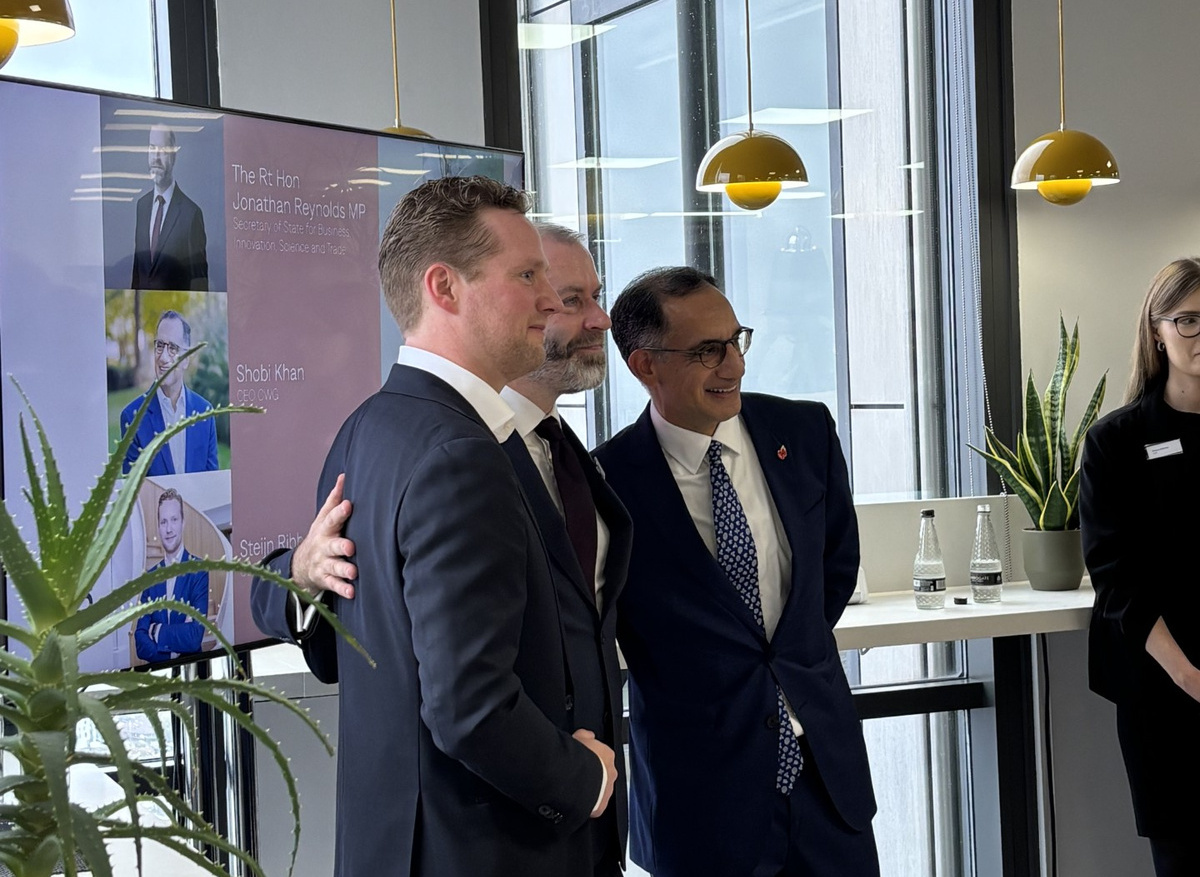
Jonathan Reynolds with industry leaders
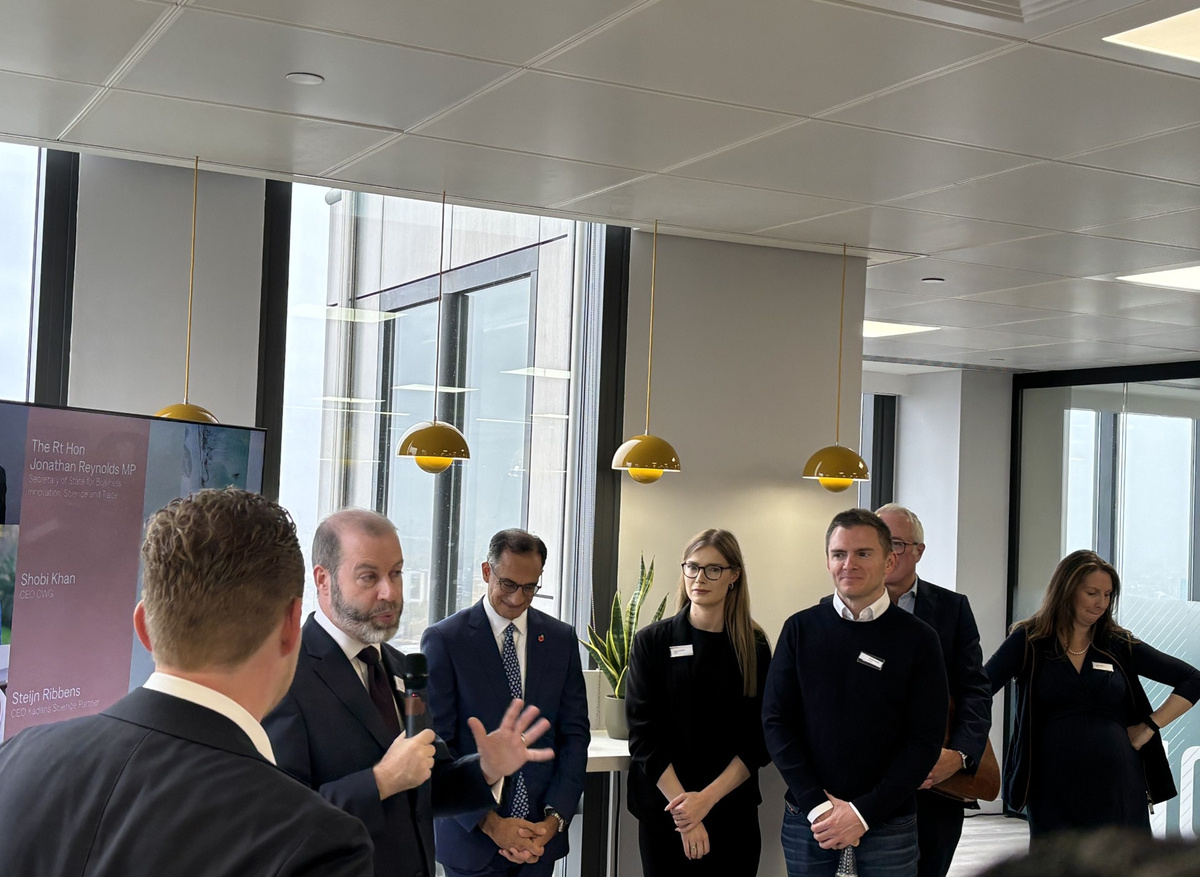
Jonathan Reynolds with industry leaders
Faster UK clinical trials can bring treatments to patients sooner
There was welcome news this week on the UK’s clinical trials environment, with Government announcing it has met its target for 95% of commercial clinical trials to recruit their first participant within 150 days.
The latest figures show that all commercial trials commencing set-up between January and March 2026 met this target, while average set-up times fell by 35%, from 153 to 100 days compared with the same period last year. This represents significant progress and reflects the work being undertaken across the clinical research system, including through the NIHR Industry Hub, with which BIA has been closely engaged.
To help build on this progress, we will be reaching out to all our biotech members to gather feedback and case studies on their recent experiences of conducting clinical trials in the UK, informing our continued engagement with government and delivery bodies.
Build digital and AI skills across UK life sciences
Our next Community Connects webinar on 4 November 11am–12am will help life sciences organisations build capability and become ready to adopt digital tools.
Digital capability is becoming a core business requirement across life sciences. This practical session brings together experts and company representatives to help organisations assess their skills needs and choose their next steps.
The Life Sciences Jobs Plan identifies digital and AI skills as critical to the sector’s future, with programmers and software development professionals representing the largest area of projected job growth to 2035. For many biotech SMEs, the immediate challenge is finding the right training, funding and approach.