

How BIA is keeping life sciences on top of the political agenda
Welcome to the new-look BIA influence report, Lab bench to front bench, your new monthly window into how BIA is shaping the UK policy environment.
Each month, we’ll report how BIA is championing members’ voices in Government and Parliament. We’ll also put a spotlight on an area where our work is moving the dial and flag what’s coming up next in the policy world. And because we know some of you (like us) can’t quite get enough, we’ll share our hand-picked reading recommendations as well as other content worth dipping into.
If you want to know how biotech priorities are landing with ministers, MPs and officials, and how BIA is translating your insights into policy influence, you’re in the right place.

Maddy Anderson
Senior Policy and Public Affairs Executive, BIA
Engagement with Government and Parliament
In case you missed it, last quarter we:
- drove the agenda with a multi-pronged Autumn Budget campaign to press the case for sustained support for the sector
- raised members’ voices (and Kate Bingham’s book) in front of a House of Lords committee, setting out how better support for SMEs is critical to preventing future medicine supply disruptions
- shaped policy behind the scenes through 15 written briefings and consultation responses. These equipped policymakers with our members’ insights on issues from GMO regulations to global talent visas
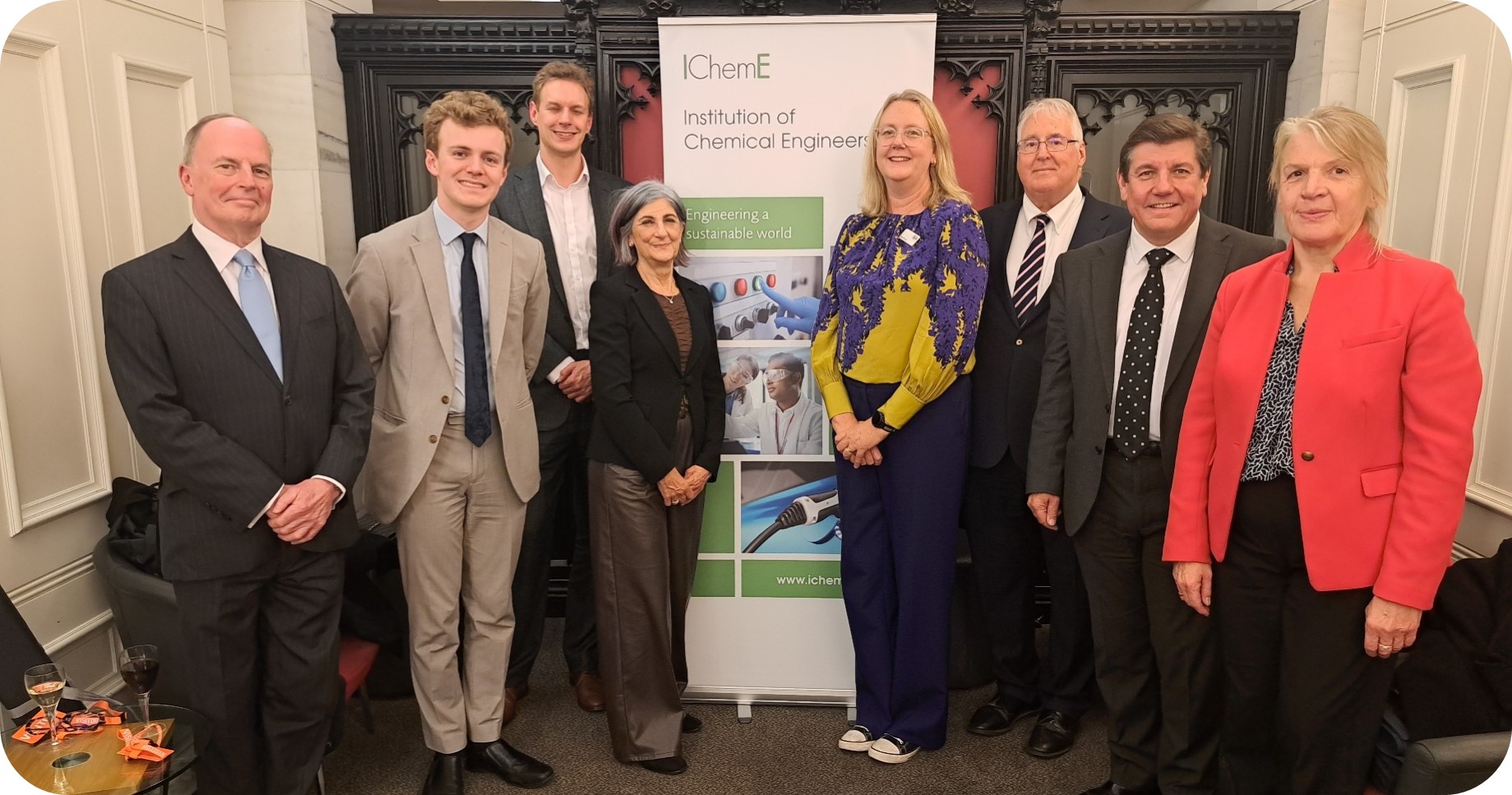
- told the Parliamentary and Scientific Committee how to fix skills gaps in the UK industrial strategy with colleagues from ICHemE
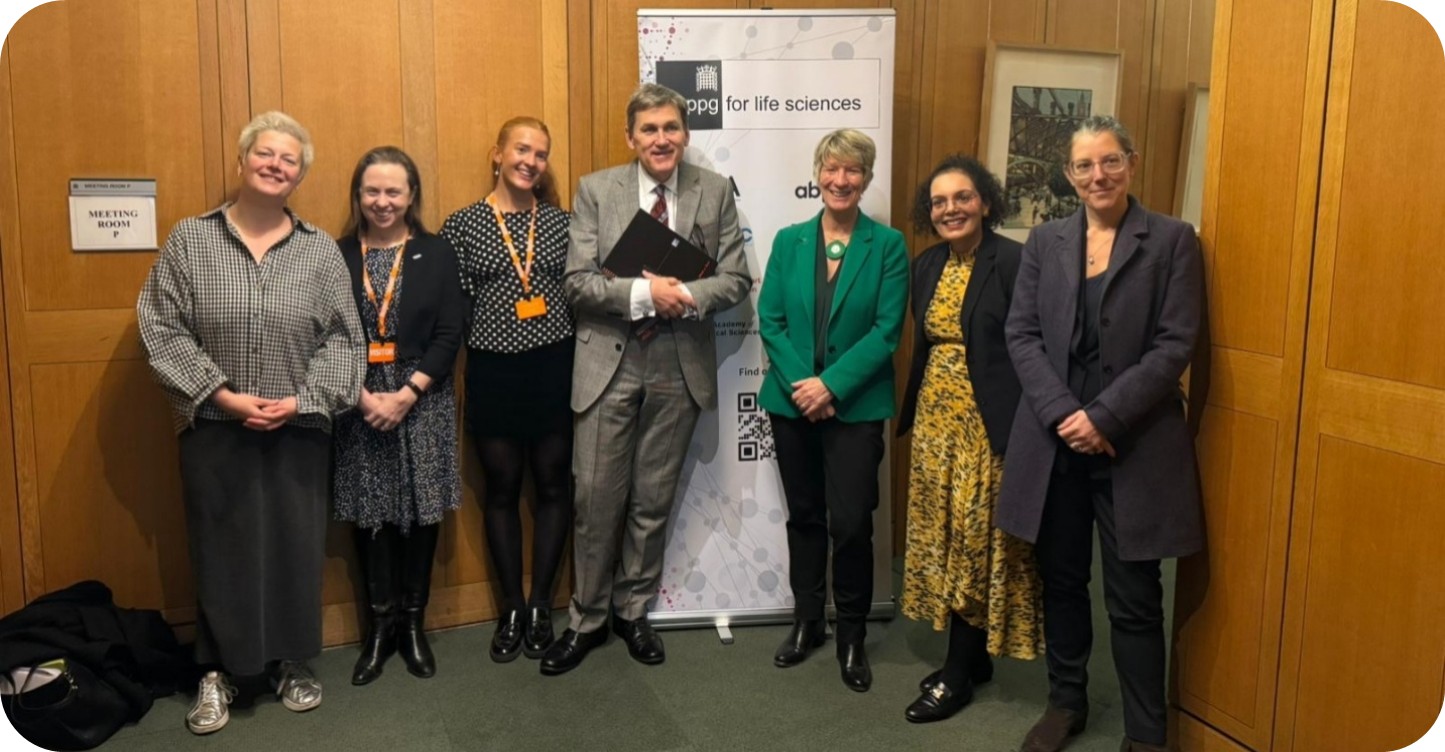
- supported an All Party Parliamentary Group roundtable on the UK’s current competitiveness in life sciences, hearing views from Isomorphic Labs and other life sciences stakeholders.
As the new year got underway, BIA hit the ground running. We:
- set the stage for the UK Government at the JP Morgan Healthcare Conference. BIA partnered with the Office for Life Sciences and the Department for Business and Trade to host the UK reception, where Health Innovation Minister Zubir Ahmed championed the UK life sciences offer to international investors
- contributed to parliamentary understanding of emerging science, with BIA’s assessment of the current state of technology alternatives to animals in research published in a POST briefing
What is POST?
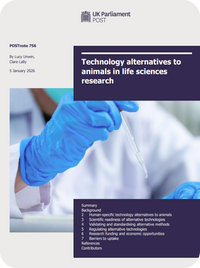
The Parliamentary Office of Science and Technology (POST) is Parliament’s in-house science and research service. It provides MPs and Peers with impartial, peer-reviewed briefings on emerging and complex science and social science issues and connects parliamentarians with researchers and experts across the UK.
BIA has continual engagement with POST by contributing sector expertise and evidence, helping ensure policymakers are informed about developments across the UK life sciences ecosystem. Look out for their upcoming Rare Genetic Disease project in March, which we also contributed to on our members’ behalf.
- welcomed Secretary of State Liz Kendall at our annual Gala Dinner, where she announced a new protected 10-year budget for the MRC Laboratory of Molecular Biology and reiterated the government’s ambition to make the UK the leading life sciences economy in Europe by 2030
- continued to deepen direct parliamentary engagement, holding one-to-one meetings with MPs to highlight the impact of biotech in their constituencies and press the case for BIA’s national policy priorities
- responded to yet more consultations! You can find all our recent consultation responses here.

Spotlight: reflecting on the year where biotech scale-ups got the attention they deserve
For much of the past decade, UK life sciences has lived with a familiar paradox: world-class science, strong company formation – yet too few companies of scale. Capital thinned just as ambition grew, and the draw of the US market has historically led to companies moving overseas or being bought out too early.
In 2025, that story began to change – BIA members like Immunocore, Autolus and Bicycle, among others, bringing products from discovery to market, from here in the UK.
BIA has worked consistently over the years on addressing the scale-up challenge. In 2025, we secured support for scale-ups in the Government’s Life Sciences Sector Plan and the strategies of the British Business Bank and UKRI.

Dr Martin Turner
Director of Policy and External Affairs, BIA
Life Sciences Sector Plan
Our engagement with the Labour Party prior to the General Election ensured life sciences was one of the eight sectors prioritised in the Industrial Strategy, and in early 2025, we participated in multiple government task and finish groups to shape the Life Sciences Sector Plan, published in July. This plan was different to previous government strategies; it had an explicit emphasis on biotechs and scale-ups.
BIA’s direct input secured government commitment to:

- substantially enhance the UKRI offer to biotech and MedTech SMEs
- substantially enhance the NIHR offer to biotech and MedTech SMEs to develop and evaluate high-value innovation
- establish a dedicated service to support 10–20 high-potential UK companies to successfully scale, invest and remain domiciled in the UK
- ensure life sciences sector will benefit from an additional £4 billion of Industrial Strategy Growth Capital from the British Business Bank (BBB)
- crowd-in additional global investment into UK life sciences by publishing the BBB’s VC investment return data.
Throughout the second half of 2025, BIA worked closely with the Office for Life Sciences, BBB and Innovate UK, part of UKRI, to make these a reality.
Government investment
In Autumn 2025, the BBB published its five-year plan, committing 60% of its venture and venture-growth investment to be targeted towards scale-ups, with the ability to make bigger commitments (£100 million+) into the best growth-stage funds. In December, the Bank wrote its biggest cheque to date - to SV Health Investors.
UKRI published its spending priorities in December, including a significant shake-up of how it funds research and innovation. Within this, £7.4 billion will be invested by UKRI between 2026 and 2030 to support innovative companies’ growth, “helping firms to start, scale and remain in the UK”.
Unlocking pension funds
Complementing this government investment, BIA’s campaign to unlock pension funds to invest in scale-ups also showed signs of bearing fruit in 2025. BBB announced pension funds Aegon UK, NatWest Cushon and M&G as its partners for the targeted first close of its British Growth Partnership Fund I. This will direct £200 million into the Bank’s portfolio, which includes 15 life science VC funds. Aviva also invested in BIA member Cambridge Innovation Capital’s Opportunity Fund, showing real deployment of pensions capital.
Although delivery of these commitments across government and the pensions industry is at an early stage, they show BIA’s persistent championing of scale-ups and influence on government policy is having an impact for members who are currently facing a challenging financing environment. Our work continues, and we enter 2026 with energy and passion to make an impact for our members, whether they are start-ups, scale-ups or established global players.
This month's picks from the Policy and Public Affairs team
- BBC Radio 4’s The Bottom Line features life sciences in an episode on “What is the UK good at?”, featuring Dame Kate Bingham recounting BIA’s Vaccine Manufacturing Taskforce work during the pandemic.
- Also on the BBC, Evan Davis lifts the curtain on ARIA, the Advanced Research + Innovation Agency. He explores why Dominic Cummings' bold, DARPA-inspired bet on high-risk science could be one worth taking, as ARIA's annual cheque from DSIT is set to reach £400 million by 2030.
- A policy paper called Project Hawking is gaining attention in government. The brainchild of think tanks Labour Together and Centre for British Progress, the paper sets out how to triple the OxCam Arc by 2050. As The Times reports, ministers are actively considering its case for bold delivery, planning reform and science-led growth.
- This independent UKRI review draws on extensive knowledge across the research and innovation ecosystem. Led by Tony Hickson, Chief Business Officer at Cancer Research UK, it makes the case for a strengthened role for universities in commercialisation, and a more streamlined approach across UKRI and public finance institutions to better support high-growth, research-intensive sectors.
Looking ahead
- The Government’s National Wealth Fund will shortly publish its five-year plan, including how it will support life sciences and engineering biology infrastructure.
- We are currently responding to the HMT Tax support for entrepreneurs call for evidence and looking at the impact of business rate increases on members.
In the next edition, we’ll explore the BIA members steering the UK's approach to medicines regulation and access.
You may also be interested in

BIA Members' only