In this edition:
- Our influence activity throughout October
- A spotlight on clinical trials: the UK's 150-day set-up target, and BIA’s work with the NIHR Industry Hub to make faster, more predictable trials work for biotech SMEs
- What we've been reading across the team
- What's coming up across BIA Policy and Public Affairs

Sid Subramaniam, Senior Policy and Public Affairs Executive, BIA, and Maddy Anderson, Senior Policy and Public Affairs Executive
Engagement with Government and Parliament
October was a month of headline promises for life sciences, with plenty of small print still to come.
At the Innovation Nation Summit, the Prime Minister made dementia research a national priority and put regional innovation at the heart of his growth agenda. Local leaders will receive dedicated R&D funding for the first time, and £1 billion will go through UKRI to high-growth innovation clusters.
The MHRA published its Strategy to 2030, promising faster, more predictable decisions, a reformed framework for AI and medtech, and a strong focus on rare disease. Days later, the PM asked the MHRA to complete its review of the rules for orphan drugs in two years rather than three. For now, that applies only to rare cancers.
Ahead of the Budget, a major AI package brought £165 million for biosecurity, including a £100 million world-first lab with support from Basecamp Research, and fresh capital for the British Business Bank. The first budget of Andy Burnham’s tenure focused on founders, but further engagement is needed to shape these for biotech.
Below, we round up BIA’s policy and public affairs work in October. This month’s spotlight then turns to clinical trials, where new figures show the UK has hit its 150-day set-up target, and what still needs to change for biotech SMEs.
ICYMI, across Policy and Public Affairs in October, BIA...
-
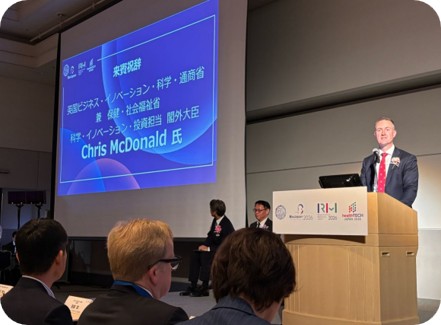
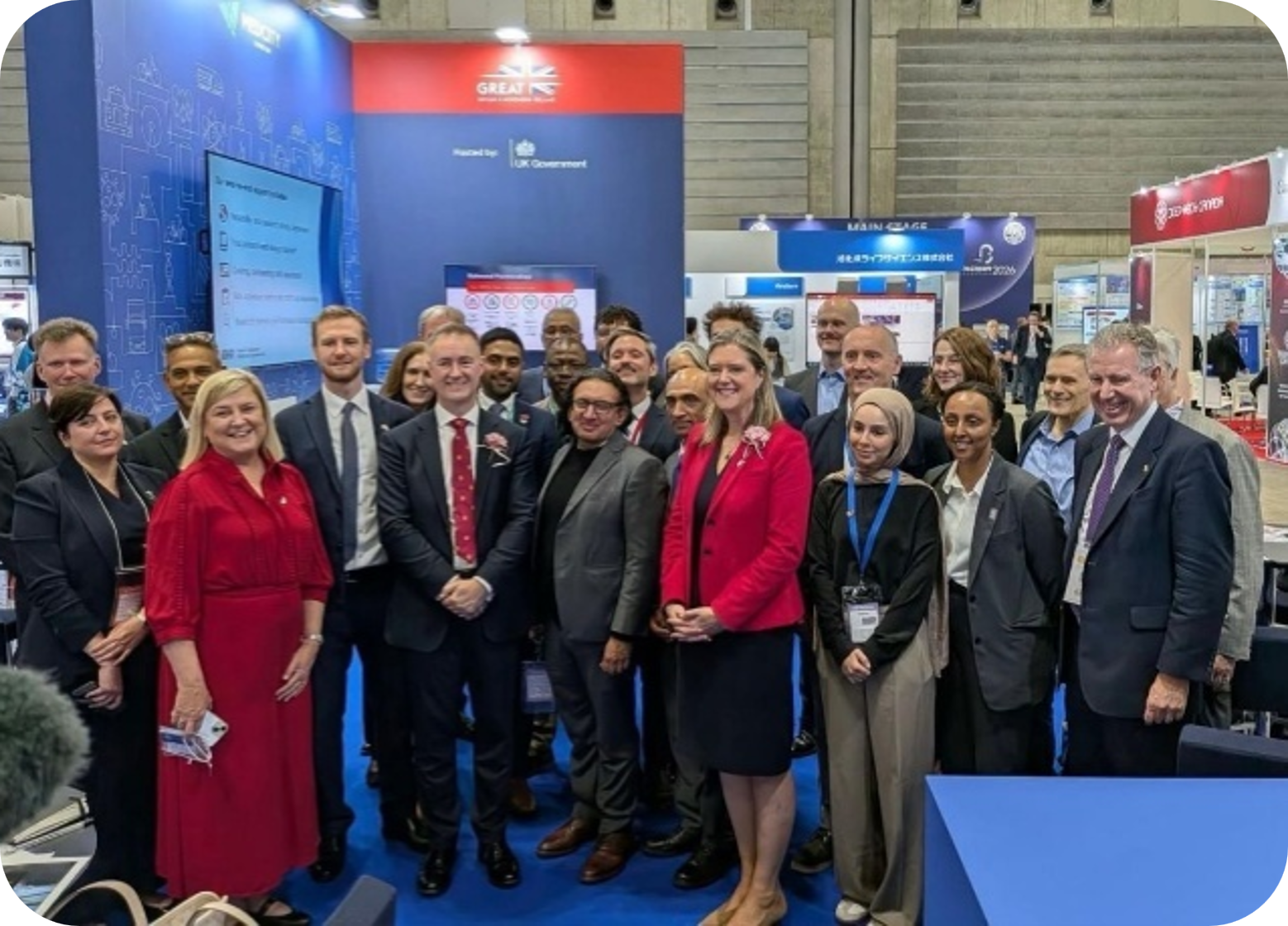
Joined Science Minister Chris McDonald and members on the UK delegation to BioJapan 2026. With MedCity and the UK Embassy, BIA presented a joined-up UK offer, from clinical trials to TechBio, and spoke at the first UK–Japan summit on dual-use technologies.
-
Wrapped up party conference season with the Green, Conservative and SNP conferences. In Aberdeen, BIA pressed Economy Secretary Stephen Flynn on how the Scottish Government will help life sciences companies access scale-up finance, on our first visit to the SNP conference since the pandemic. Read our party conference dispatches.
-
Pressed Government on assuring a fixed timeline for the reopening of UK Biobank. The resource has been closed since a data breach in April. We raised the impact that the closure was having across the sector. The resource is awaiting final sign-off for a phased reopening.
-
Fed into the Liberal Democrats’ plans to cut red tape for business in a meeting with the party’s Trade and Investment Spokesperson Joshua Reynolds. We submitted proposals for life sciences SMEs to his ‘Clearing the Way for Growth’ call for evidence. We also wrote to Treasury Spokesperson Daisy Cooper MP following the launch of the party’s growth plan, ‘Get Britain Growing Again’ with a paper showing where BIA policy proposals align with the plan.
-
Kept engineering biology on the parliamentary agenda through written questions from Science and Technology Committee Chair Dame Chi Onwurah MP on Innovate UK funding, British Business Bank investment and the £184 million Engineering Biology Scale-Up Infrastructure Programme. Minister Chris McDonald’s replies set out the funding rounds coming up over the next few months.
-
Joined a Re:State roundtable with ARIA CEO Kathleen Fisher on what the agency’s high-risk, high-reward model can teach UK innovation policy, and how government R&D can better back breakthrough technologies through to commercial scale.
-
Held a discussion on synthetic nucleic acid screening with the European Innovation Council and SMEs Executive Agency (EISMEA) and EuropaBio. Together, BIA and EuropaBio presented industry's concerns regarding the current trend from the EU and UK governments to make the screening of synthetic nucleic acids mandatory. While neither EuropaBio nor BIA opposes mandatory screening per se, both of our organisations want to ensure that any incoming regime does not overly burden the well-intentioned R&D being conducted by industry.
-
Kicked off discussions with the Welsh Government on a potential new research, development and innovation strategy. The discussion explored where Wales could play a differentiated role within the UK offer, from turning the SAIL Databank into a commercial offer for industry and building trial-ready patient cohorts, to ATMP and rare disease treatment centres that draw in small-batch manufacturing and biotech investment. We look forward to continuing the conversation as the strategy develops.
-
Gathered our corporate member colleagues for the twice-yearly Government Affairs Network dinner. The conversation centred on the Health Data Research Service: COO Chris Schonewald set out where it stands and the importance of industry collaboration and co-creation. Members were clear about what they need in order to engage.
Spotlight: strengthening the UK's clinical trials environment
October brought encouraging news, with the Government announcing that it had met its target for 95% of eligible commercial clinical trials to recruit their first participant within 150 days of applying for regulatory approval.
The latest figures show that all 24 eligible commercial clinical trials covered by the measure between January and March 2026 met this target. Median set-up times also fell by 35%, from 153 to 100 days compared with the same period last year.
The target was first announced by Keir Starmer in April 2025, against a backdrop of increasing international competition for clinical research and earlier figures showing trial set-up times exceeding 250 days. Subsequently incorporated into the Government's Life Sciences Sector Plan, the commitment aimed to reduce bureaucracy, streamline contracting and strengthen the UK's attractiveness as a destination for clinical trials. BIA also secured a commitment in the Sector Plan for the National Institute for Health and Care Research (NIHR) to “substantially enhance” its offer to biotech.
The latest figures therefore mark significant progress. Faster, more predictable trials can help attract investment, accelerate medicine development and give NHS patients earlier access to innovative treatments.
However, challenges remain. The headline target excludes advanced therapy trials, as well as certain other studies, including rare disease trials where recruitment is expected to take longer. It also does not fully capture the complexities of activating multiple NHS sites or delivering trials successfully once recruitment begins.
For biotech SMEs in particular, predictable timelines, proportionate costs and efficient trial delivery remain critical factors in deciding where to conduct research in an increasingly competitive international environment.
Over the past year, BIA has been working closely with members, policymakers and NIHR to support these improvements, with a particular focus on the needs of biotech SMEs.
Working with the NIHR Industry Hub to support biotech SMEs
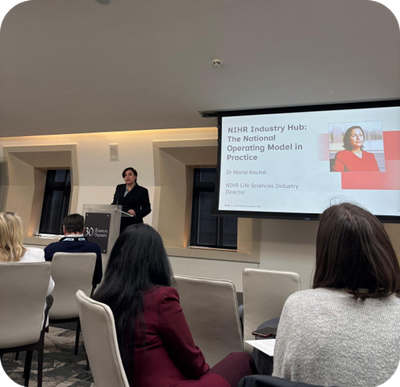
The NIHR Industry Hub Launch, March 2026
A central focus of BIA's work this year has been our close engagement with the NIHR Industry Hub, which launched in March to provide more coordinated support for commercial clinical trials across the UK.
The Hub has introduced a dedicated account management system, clearer escalation routes and improved coordination across NHS sites and research infrastructure.
Building on our advocacy for enhanced NIHR support for biotech SMEs, reflected in the Government's Life Sciences Sector Plan, BIA has been working closely with the Hub's leadership to inform the development of a dedicated biotech SME Pathway.
As part of this engagement, we have convened three roundtables, in February, April and September, bringing together biotech members and senior NIHR representatives to discuss the challenges companies face, assess progress and help shape the Hub's approach to supporting biotech SMEs.
Members have highlighted challenges around trial set-up times, costing and contracting, inconsistent practices between NHS sites and patient recruitment. Particular concerns include the additional complexities facing advanced therapy trials and the need for greater accountability where sites fail to deliver.
These discussions have helped inform our continued engagement with NIHR on ensuring that the SME Pathway provides support tailored to the particular needs of smaller companies.
A recurring priority has been ensuring that improvements extend beyond initial trial set-up to successful recruitment and completion. BIA has also advocated for sustainable, scalable funding for the Industry Hub to ensure it can accommodate growing demand while maintaining effective support for smaller companies.
Through this engagement, we are helping ensure that the experiences and priorities of biotech SMEs inform the continued development and implementation of reforms.
Demonstrating the value of coordinated support: Quell Therapeutics
One particularly encouraging example of the Industry Hub's more coordinated approach to supporting sponsors is BIA member Quell Therapeutics' CHILL clinical trial.
The Phase 1/2 study is investigating an innovative cell therapy for patients with difficult-to-treat rheumatoid arthritis and systemic sclerosis. Despite the complexities associated with advanced therapy trials, Quell screened its first participant just 113 days after submitting its Clinical Trial Authorisation application, with the UK progressing around two months ahead of European sites.
This achievement was supported by close collaboration between Quell, the NIHR Industry Hub, NHS research teams and specialist research networks, with BIA also contributing to the wider collaborative effort, as highlighted in NIHR's case study.
Through our engagement with Quell and NIHR, including sharing Quell's experience at our SME roundtables, BIA has helped showcase the benefits of this approach and its potential to improve trial delivery more widely.
Reflecting on this achievement, Laurie Baylor-Curtis, Vice President and Head of Clinical Operations at Quell Therapeutics, said:
The collaboration between the NIHR Industry Hub, NHS research teams, the UK Clinical Research Facility Network, the Advanced Therapy Treatment Centre network and BIA has been central to this success. Our experience shows that the UK has the expertise and infrastructure to deliver advanced therapy trials at pace.
In October, Quell announced a further milestone, successfully completing the study's first dose cohort, with the treatment well tolerated and no serious adverse events reported, allowing the trial to progress to its second dose cohort.
Quell's experience demonstrates how dedicated project management, early engagement and coordinated NHS support can accelerate complex clinical trials, offering valuable lessons for wider improvements across the UK.
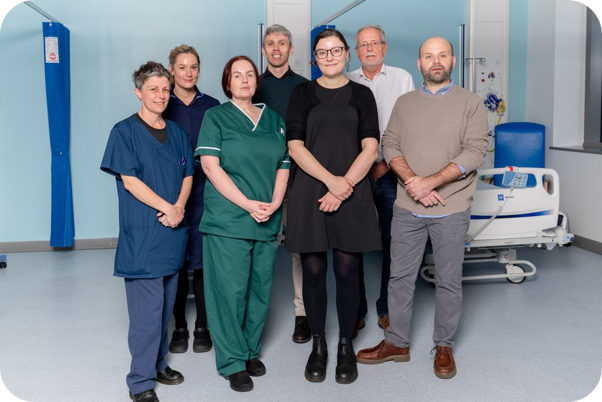
The multi-disciplinary team involved in the CHILL study at Leeds Teaching Hospitals. Credit: Leeds Teaching Hospitals NHS Trust.
Scaling up improvements for biotech companies
While Quell's success demonstrates what can be achieved, members' experiences have not always reflected the same level of coordinated support. A key priority is therefore ensuring that the Industry Hub can deliver this model consistently and at scale, so that all biotech companies benefit from faster, more predictable trial delivery.
Alongside this, wider reforms are helping streamline clinical trial processes. In July, changes to the National Contract Value Review (NCVR) introduced a faster approach to agreeing trial costs nationally, intended to reduce duplication and prevent repeated negotiations from delaying trial activation. Early results have been encouraging, with NIHR reporting improvements in budget review timelines.
To build on this progress, BIA is now reaching out more widely to biotech members to gather feedback and case studies on their recent experiences, identifying where reforms are making a difference and where further improvements are needed.
This evidence will inform our continued engagement with the NIHR Industry Hub, policymakers and other delivery bodies, with a particular focus on scaling up effective support and ensuring that biotech companies' experiences remain central to the UK's clinical research reform agenda.
BIA will continue working with members and partners to build on recent progress, strengthen the UK's position as a leading global destination for clinical research and help bring innovative treatments to patients faster.
What we’ve been reading and listening to:
- In this podcast interview, AI Minister Kanishka Narayan talks about the road from a one-bed flat in Cardiff to Eton, Silicon Valley and Andy Burnham’s Cabinet table. It’s a useful listen on the man now setting the UK’s AI strategy, including why he thinks Britain can punch above its weight on global AI cooperation.
- In an interview with The Times, Alex Depledge explains why she quit as the Government’s Entrepreneurship Czar, stating that entrepreneurs are “not a sideshow”.
- Jonathan Tobin at BIA member Brandon Capital takes an interesting look at the past decade of European biotech financing to find a nuanced picture of the challenges the ecosystem faces.