Life sciences industry calls for policy continuity to help companies scale at BIA roundtable with Dr Zubir Ahmed MP
- UK life sciences leaders called for policy continuity, scale-up investment and faster NHS adoption to help companies start, scale and stay in the UK.
- The sector is a major UK strength but needs stronger domestic investment.
- Industry urged Government to deliver the Life Sciences Sector Plan through action on finance, translation, clinical trials, medicines access, manufacturing and regional growth.

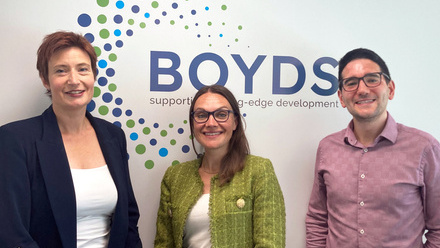
Chris Molloy, CEO of the UK BioIndustry Association, and Dr Zubir Ahmed MP
London, 3 July 2026 – The UK’s innovative life sciences sector has called on Government to deliver policy continuity, unlock scale-up investment and improve patient access to new medicines at a UK BioIndustry Association (“BIA”) industry roundtable with Dr Zubir Ahmed MP.
The numbers behind the growth
Ahead of a change in Government leadership, the innovative life sciences and biotech industry has emphasised that the UK has the scientific base, clinical infrastructure and entrepreneurial ecosystem to convert our world-leading discovery engine into economic growth.
The sector already attracts more than 40% of European biotech venture capital, employs more than 360,000 people across 7,320 companies, generates over £146 billion in turnover annually and is the UK’s second largest exporter by value. However, a lack of large domestic investors and slow NHS adoption of innovation means the UK is at risk of not capitalising on this competitive advantage.
The need for sustained action is underlined by the British Business Bank’s The Small Business Equity Tracker report, published on 2 July, which shows that life sciences remained one of the larger Industrial Strategy growth-driving sectors (IS-8) for equity activity in 2025, ranking third by investment value at £2.3 billion and joint third by deal numbers. However, the report also found that the sector experienced sharp contractions in 2025, with investment value falling by 23% – the steepest decline across the IS-8 sectors considered – and deal numbers down 18% on 2024.
Unlocking scale-up finance
BIA members participating in the roundtable highlighted access to finance as the most urgent barrier to growth. While the UK remains the clear European leader for life sciences venture investment, companies continue to face a scale-up funding gap compared with the US. The industry, alongside BIA, called for Government to unlock £500 million investment for the sector from UK pension funds in 2028; prioritise life sciences in the British Business Bank strategy and British Growth Partnership; and run a minister-led campaign to engage pension funds and advisers on the UK life sciences opportunity. They also highlighted the importance of maintaining and enhancing R&D tax reliefs.
Turning research into fundable companies
The roundtable also underlined the need for a stronger pathway from research to company creation. Industry urged Government to increase proof-of-concept funding in life sciences; remove barriers to university technology transfer and startup creation; and harness investors, CROs, CDMOs and wider ecosystem partners to industrialise translation.
Using NHS data and clinical trials to support innovation
Industry leaders stressed that a modern NHS must be able to support research, trials and innovation adoption. Industry leaders called for health data assets, such as Our Future Health and the Health Data Research Service, to focus on UK value creation, particularly through affordable access for UK SMEs. They also urged Government to prioritise innovative clinical research across the NHS; scale up the NIHR Industry Hub to provide central coordination and escalation for all sponsors; and utilise health data to speed up clinical trial recruitment.
Capturing more value through manufacturing and medicines access
To capture more value from UK science, participants called for stronger support for medicines manufacturing and a more competitive access and reimbursement environment. Priorities included fiscal incentives to attract manufacturing, noting the success of Ireland, and securing UK–EU mutual recognition for batch testing and QP release. Industry called for continued collaboration between Government and industry to improve access to medicines for NHS patients, especially those with rare disease, through the US-UK pharmaceuticals deal.
Backing regional life sciences strengths
BIA members present included Alzheimer’s drug developers TauRx based in Aberdeen, diagnostics company Nonacus from Birmingham and medicines manufacturer FUJIFILM Biotechnologies from Stockton-on-Tees. Attendees underlined that the UK’s life sciences strengths are spread across its nations and regions, with 77% of life science sites located outside the south east of England. They noted the pertinence of this as regional devolution is discussed in the run-up to the Labour leadership change. They called for growth plans to build on local specialisms in research, clinical capability, manufacturing and company formation, helping UK-domiciled businesses create well-paid jobs and deliver innovations for patients across the country.
Delivering the Life Sciences Sector Plan
The discussion reinforced that the Life Sciences Sector Plan sets the right direction, but delivery, consistency and investor confidence will be critical. BIA and industry leaders urged Government to reiterate its commitment to the Mansion House reforms, the industrial strategy, the Sector Plan and maintaining R&D tax relief, while creating a single, unified UK life sciences investment pitch to attract global capital.
Dr Zubir Ahmed MP said: “Life sciences is one of Britain's great success stories and is the route back to place based economic growth. We have world renowned doctors, scientists and clinical academics pushing the boundaries every single day in a universal health service that serves the whole nation and treats every patient. I was proud in my 20 years of NHS service as a surgeon to be a part of that research tradition.
“The challenge and opportunity now are to turn that passion and hunger for discovery into companies that have the confidence to start, scale and stay in the UK. Today's discussion was a valuable opportunity to hear directly from industry about how we can unlock investment, accelerate innovation and ensure patients benefit more quickly from the next generation of medicines and technologies.
“To make this a reality the NHS in every nation and every region needs to play its fulsome part, embrace the idea that research is care and that the best care happens where the best life science happens. The prize, if we are bold enough, is that we can simultaneously create well paid secure jobs, make our NHS fit for the future and cement the UK’s position as a global leader in healthcare innovation.”
Chris Molloy, CEO of BIA, commented: “BIA is the national champion of our industry. Bringing the sectors’ voice to bear in the formation of a new administration is vital to maintain its momentum and global competitiveness in a fast-moving world.”
ENDS
About the UK BioIndustry Association (BIA):
The UK BioIndustry Association (BIA) is the voice of the innovative life sciences and biotech industry, enabling and connecting the UK ecosystem so that businesses can start, grow and deliver world-changing innovation.
BIA has over 600 members spanning human health and non-health biotech, including start-ups, scale-ups and established global companies. Membership also encompasses the full UK ecosystem, including non-commercial research institutions and service providers. BioIndustry Association | BIA