
In this edition:
- An update on our influence activity in April
- A spotlight on how BIA is strengthening UK medicine manufacturing
- What we've been reading and listening to
- What's coming up across BIA Policy and Public Affairs

Abby Clark, Manufacturing Programme Manager, and Maddy Anderson, Senior Policy and Public Affairs Executive
Engagement with Government and Parliament
In case you missed it:
- The Pension Schemes Bill received Royal Assent: A major milestone in shifting the UK's risk-averse pensions culture, but with pressure now on the pensions industry, advisers and government to turn this trickle of capital into a sustained flow.
- Changes to EMI and EIS/VCT schemes took effect, significantly raising investment and eligibility limits — expected to unlock ~£100m a year in additional funding, following sustained BIA campaigning and Rachel Reeves' push to boost growth finance.
- So did major clinical trials reforms, enabling faster approvals for first-in-human studies, streamlined pathways for low-risk trials and greater transparency, reflecting years of BIA engagement and advocacy.
- Parliamentary scrutiny of the NICE (Amendment) Regulations 2026 continued across both Houses during April. Motions from Lord Lansley, Dominic Johnson and Baroness Jenny Jones, alongside a cross-party Early Day Motion in the Commons with 35 supporters, reflect ongoing interest in how the new ministerial direction powers sit alongside NICE's statutory independence. As expected, the motions ran out of time before the session closed - though the question of ministerial direction over NICE looks set to remain a live one in the medicines policy debate. BIA responded to the original DHSC consultation on these changes in January - you can read our full response here.
- AstraZeneca UK Chair Shaun Grady appeared before the Business and Trade Committee's inquiry into China and the UK economy. He outlined how China has shifted from a manufacturing base to a world-class source of innovation, and why now "the biggest risk is not collaborating with China." He was also direct on what the UK needs to fix closer to home.
How BIA shaped the agenda - some highlights from BIA’s direct influencing and engagement this month:
- Met with former health secretary Lord Lansley to discuss BIA’s rare disease pathway policy development
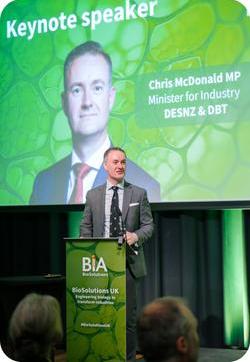
- Shaped a Commons debate on regulation and biosolutions where Ministers were urged to protect the UK’s pro-innovation framework in EU SPS talks, citing BIA’s calls to secure carve-outs for precision breeding, while Minister Chris McDonald and George Freeman MP reinforced at BioSolutions UK that a £1.46bn biosolutions sector will only scale with clear, enabling regulation that underpins sustainability, security and growth.
- Joined the next round of high-level conversations in the new joint taskforce established following the UK–US pharmaceutical deal, discussing the impact of MFN and other policy developments on patient access alongside partners from the pharmaceutical sector, NHS England, NICE and patient groups.
- Convened two roundtables bringing BIA member companies together with senior officials in the UK's research ecosystem: one with the NIHR to discuss their newly launched Industry Hub model, and another co-chaired by Mel Ivarsson and Jane Wall on opportunities for HDRS to support the biotech industry.
- Pushed back on the government's proposed rebate rate for medicine sales, arguing it remains significantly higher than in comparable European countries — sending the wrong signal at a time when government is trying to attract life sciences investment. Our response highlighted the particular impact on SMEs with no other revenue streams and called for a more transparent consultation process.
- Participated in a government roundtable, led by Steve Bates and attended by OLS and Skills England, where our members' views on policy flexibilities and targeted support for workforce growth were welcomed.
- Represented the sector in an APPG for Entrepreneurs evidence session on R&D Tax reliefs led by The Lord Marks of Hale CBE
Spotlight: Strengthening UK medicine manufacturing through targeted policy influence and funding access
Medicine manufacturing is critical to the UK’s life sciences leadership, enabling the translation of cutting-edge research into scalable, commercially viable products. However, companies across the sector (particularly SMEs) continue to face persistent challenges around access to capital, infrastructure, and clear pathways to scale.
BIA has played a central role in ensuring that government funding schemes and policy frameworks better reflect the needs of innovative manufacturing companies. Through sustained engagement with policymakers and close collaboration with our members, we have helped shape key funding programmes, influenced national strategy, and ensured that SME voices are heard at the highest levels.
Unlocking investment across the manufacturing landscape
In response to sustained work by BIA and others across industry, the Government has introduced several major funding programmes to strengthen UK manufacturing capability across the innovation lifecycle.
The £500 million Life Sciences Innovative Manufacturing Fund (LSIMF), advocated for by the BIA, is a capital grants programme, designed to support investment in commercial manufacturing facilities and anchor high-value activity in the UK. LSIMF is a follow on scheme from its pilot, the Medicines and Diagnostics Manufacturing Transformation Fund (MDMTF).
The Transformational R&D Investment Fund (TRIF) supports the development of cutting-edge R&D and pilot-scale infrastructure, helping bridge the gap between early-stage innovation and commercial manufacturing.
Together, these government programmes have the potential to create a more coordinated and competitive manufacturing ecosystem, but their impact depends on how well they meet the needs of innovative companies. BIA has played a key role in ensuring that this happens, and will continue to do so.
Alongside these programmes, additional initiatives such as Innovate UK’s Labs of the Future and the VPAG funded Sustainable Medicines Manufacturing Innovation Programme form part of a wider, connected funding ecosystem, collectively strengthening the UK’s end-to-end medicines manufacturing capability and supporting long-term sector growth.
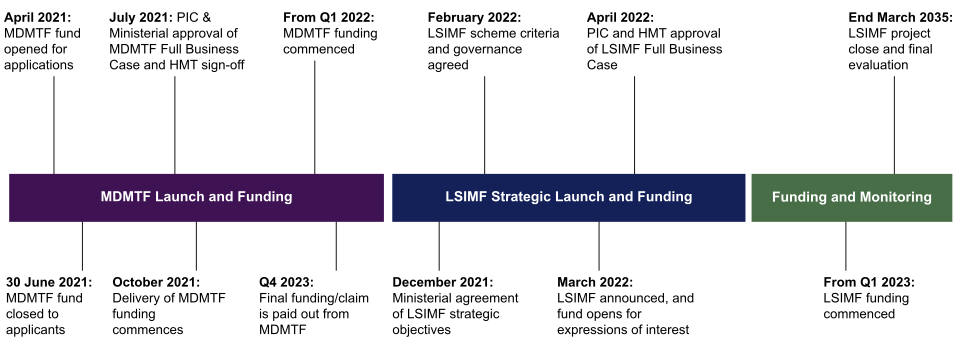
Timeline and delivery of the MDMTF and LSIMF. Source: https://www.gov.uk/government/publications/evaluation-of-the-medicines-and-diagnostics-manufacturing-transformation-fund-and-the-life-sciences-innovative-manufacturing-fund/evaluation-of-the-medicines-and-diagnostics-manufacturing-transformation-fund-and-the-life-sciences-innovative-manufacturing-fund.
Shaping LSIMF to work for innovative SMEs
BIA has played a direct role in shaping the design and evolution of these funds, ensuring that the perspectives of members, specifically its Manufacturing Advisory Committee (MAC) members, are effectively represented in engagement with government. This has included advocating for reduced application complexity, the removal of parental or bank guarantee requirements, greater transparency through upfront communication of intervention rates, and a more consistent and predictable approach to funding allocation. These changes are intended to improve accessibility, provide greater certainty for investors, and ensure the funding is better aligned with the needs of innovative manufacturing companies seeking to establish and scale operations in the UK.
The recently published LSIMF evaluation by Ipsos provides strong validation of both the scheme’s impact and the need for further reform. It shows that 8 of the 13 assessed projects attracted investments for the UK that would otherwise have been lost overseas, scaled down or delayed, with 380 jobs created or safeguard across these projects. The programme-level benefit-cost ratio of 1.9–2.7 suggests strong value for money - and that's before accounting for health resilience benefits. Yet with eligible applications for the pilot alone totalling £109 million against a £20 million budget, the scale of unmet demand makes the case for further investment clear.
Crucially, the evaluation also highlights persistent challenges that align closely with BIA’s recommendations. Applicants continue to report unclear guidance and burdensome due diligence processes, particularly for smaller grant requests, while growth-stage companies face barriers linked to financial requirements such as parental guarantees.
The report’s recommendations which include streamlining processes, improving guidance and feedback, and expanding access to a broader range of companies, mirror BIA’s policy positions. This alignment demonstrates the impact of our advocacy and the extent to which member insight is shaping government thinking.
Over the last year, we have seen many announcements of LSIMF supporting companies to build or expand in the UK. Each grant plays a crucial role in the development of domestic manufacturing.
- Over £30 million of investment in West Midlands firms such as Biocomposites and Sterling.
- UCB confirmed a £500 million investment in UK pharmaceutical R&D and manufacturing, with plans to develop medicines for immunological diseases from a new world-class research hub in Windlesham, supporting cutting edge research and creating high‑ skilled‑ jobs.
- Orchard Therapeutics (the UK subsidiary of Japanese pharmaceutical company Kyowa Kirin) is also set to invest around £11 million in the UK, working towards the discovery of new drugs which could treat and beat diseases.
- Norgine will also make a £23 million investment thanks to support from the LSIMF, expanding production of essential pharmaceuticals at their facility in Hengoed.
- Accord confirmed a £45 million investment as one of the largest suppliers of oncology and chemotherapy medicines in Europe.
- The University of Birmingham’s Precision Health Technologies Accelerator (PHTA) will invest £10 million in a programme to establish a new near-patient biomanufacturing facility.
- Codis have committed to investing in a new facility in Haverhill, Suffolk, using advanced spray-drying technology to support the development of next-generation therapies.
Securing a more competitive operating environment
Alongside capital funding, BIA has worked to address the cost of energy, one of the most significant cost barriers facing UK manufacturers.
In our joint response with ABPI to the British Industrial Competitiveness Scheme (BICS) consultation, we set out clear recommendations to ensure the scheme supports life sciences manufacturing effectively. These included reducing administrative burden, introducing flexibility in eligibility, and pro-rating relief to reflect the structure of manufacturing operations.
We are pleased to see that the government’s published response reflects several of these recommendations. The decision to assess eligibility at site level, move away from testing energy intensity at the individual company level, and introduce greater flexibility around product classification are all important steps towards a more accessible and effective scheme.
Combined with the LSIMF and other financial incentives we have campaigned for, these changes will help ensure that innovative and R&D-intensive manufacturers are not excluded from support, improving the UK’s attractiveness for inward investment and strengthening the competitiveness of the sector.
This month's picks from the Policy and Public Affairs team
- Who owns my health data? This Nature article explores how the global race for AI dominance is reshaping access to biomedical datasets and the associated risks - shifting from open science toward “data sovereignty”.
- New pensions bill is rare piece of policy gold – For more on why our pensions work matters, Emma Duncan makes the case in the Times that the reforms could be transformative for unlocking capital into higher-risk, higher-return asset classes like biotech VC – also highlighting what superannuation has done for growth in Australia.
- Entrepreneur and former Number 10 AI adviser Matt Clifford tells Amol Rajan what it will take to make the UK grow again. Clifford argues that many of the UK's problems are downstream of pensions and the low exposure of ordinary households to equities, and puts his finger on why ‘vetocracy’ is a pathology that runs through government: “Of course there are valid objections to a radical upheaval in our pension scheme. But we have this seen versus unseen”. “We see the person that loses out from any change as a real person whose voice must be heard. But we see the people who lose out from non-change, who lose out from stagnation, as statistics that can be ignored."
- Can the U.K. Capture Biotech Value? – BioCentury covers the global biotech industry for investors and dealmakers, and in this podcast episode their editor-in-chief Simone Fishburn sits down with former BIA chair and Novo Holdings senior partner Daniel Mahony to discuss why the UK excels at science but struggles to capture its economic value - and what the current wave of reform on financing, clinical trials and drug pricing could mean for the sector's future.
Coming up across BIA Policy and Public Affairs
Be featured in BIA flagship biomanufacturing directory and baseline report
We’re developing the UK’s first directory mapping CDMOs and CROs - and inviting licensed organisations to take part. It will showcase UK capabilities, support government resilience work, and provide a baseline for policy and industry. Launching at bioProcessUK. Contact Netty England to be included.
Share your regulatory challenges with government — deadline 19 June
The Regulatory Innovation Office (RIO) is gathering evidence on the regulatory barriers holding back innovation across science and technology sectors. Their Front Door pilot makes it easier for businesses to flag challenges directly to government, helping RIO target reforms where they are most needed.Phase 1 focused on defence and robotics. Phase 2 is now open to all science and technology sectors, including life sciences. The deadline to submit is 19 June 2026.