Turning environmental innovation into real-world impact starts with navigating the regulatory pathway
Bringing together regulatory information and practical considerations for innovators developing environmental GMM technologies

Dr Karen Fung Tuncer
Research Fellow at Cranfield University
Engineering biology (EngBio) is opening up exciting new possibilities for tackling some of our most pressing environmental challenges.
From pollution remediation and waste management to environmental monitoring and resource recovery, innovators are developing increasingly sophisticated biological solutions to address these needs1. Central to many of these innovations are genetically modified microorganisms (GMMs), offering new ways to deliver environmental biosolutions.
Is regulatory uncertainty holding innovation back?
Whilst the science and technology has advanced apace, the translation of EngBio based environmental solutions into products and services has been slow, partially due to uncertainty over regulatory requirements and processes. For innovators developing GMMs for environmental applications, navigating the regulatory requirements can be particularly challenging. Uncertainty often arises around which regulators may need to be involved, which regulatory pathways apply, and what level of scientific evidence is needed to demonstrate environmental safety.
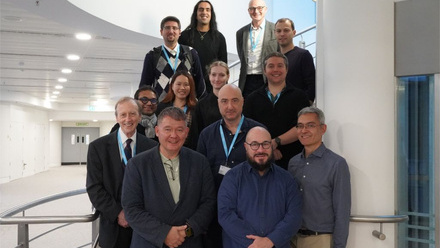
These challenges were highlighted during the UK-EU roundtable discussion on Carving a Path to Regulatory Approval for Environmental Biosolutions, co-hosted by the UK BioIndustry Association (BIA) and EuropaBio. Discussions emphasised the need to strengthen the scientific evidence base underpinning environmental risk assessments and explore more proportionate and efficient regulatory pathways for well understood applications².
Conversations with EngBio start-ups and spinouts have further highlighted the practical challenges innovators face. Some innovators struggle to identify the regulatory approval pathways relevant to their technology, are unsure about the thresholds and requirements applied, and the quality and extent of evidence needed to support regulatory applications. It is important to emphasise that the challenge is not necessarily that the regulations themselves are unclear or disjointed, but rather that it is often difficult for innovators to source and interpret information that is directly relevant to their specific technology. This is particularly the case where applications may involve multiple regulators, different stages of regulatory approval, or specialised biocontainment and inactivation techniques.
Regulations play a vital role in ensuring the safe development and use of GMMs. Making regulatory information more accessible and helping innovators understand what requirements are needed can support a more confident and informed approach to technology development.
Navigating regulations for environmental GMMs
To address these challenges, the Engineering Biology Innovation Centre (EBIC), a UKRI funded Engineering Biology Mission Hub has issued guidance outlining the current UK regulatory pathways for GMMs developed for environmental applications. The guidance is designed to provide a practical starting point for innovators seeking to understand the regulatory landscape for GMMs, pinpoint relevant sources of information, and identify the key questions to address as their technologies progress. It brings together information on both Contained Use and Deliberate Release regulations, alongside practical considerations around risk assessment, regulatory processes, inactivation and waste management.
To help translate regulatory information into practical applications, the guidance also includes a series of case studies mapping the regulatory framework for different types of EngBio application for environmental challenges. The aim is to provide an entry point to the regulatory landscape for innovators, helping them better understand the expectations involved in securing regulatory approval and progressing their biosolutions towards environmental deployment.
Turning regulatory understanding into a route to market
Regulations should not be viewed as a final hurdle once a technology is ready for deployment. Rather, it is an important part of the journey from scientific concept to real-world application. Understanding regulatory requirements early can help innovators identify the evidence they need to generate, anticipate regulatory challenges during technology development, and plan more effectively for scale-up and environmental testing. Early engagement with regulators can also provide valuable opportunities to clarify expectations, discuss emerging technologies, and build a shared understanding of the evidence needed to demonstrate safety.
By improving access to regulatory information and encouraging earlier dialogue between innovators, regulators and the stakeholders will be essential to creating an environment where safe and innovative environmental biosolutions can progress towards market adoption.
Engage regulators early, shape the pathway together, and turn regulatory uncertainty into a route to market.
To access the EBIC guidance documents, see EBIC Guidance Documents on Regulatory Approval
References
[1] Lea-Smith, D.J. et al. (2025) Engineering biology applications for environmental solutions: potential and challenges. https://doi.org/10.1038/s41467-025-58492-0
[2] BIA (2026) Carving a path to regulatory approval for environmental biosolutions: High-level conclusions of UK-EU roundtable, June 2026. Policy briefing, 20th August 2026
This is a guest blog. Its author/s is/are responsible for content within it, which does not necessarily reflect the opinions or positions of BIA.