
CEO blog: Budget digest for UK biotech; new UK site openings; rare conditions policy and life sciences skills
Dear colleagues,
The Budget gave UK life sciences fresh scaling capital, retained fiscal support and had a clear focus on founders. However, the Founders’ Relief that was proposed did not fit biotech. We are already working with Treasury and members to ensure that this clear statement is heard and the policy reviewed.
We will also continue our work across UKRI to ensure that early-stage stimulus funding that is already agreed is secured and made to flow. We need to see existing Government commitments to funding, trials and adoption delivered and UK companies to get priority access to public sector research infrastructures, cohorts and services. These measures are all targeted to give UK companies the home advantage they deserve.
This update also looks at the push for a renewed UK rare conditions policy and our work with regulators on the needs of biotech SMEs. I am looking forward to the RDIG dinner on Tuesday, while our next Community Connects webinar will help companies take practical steps on digital and AI skills.
In this update:
- Budget priorities: British Business Bank funding and pension capital
- Life sciences expansion at Wellcome Genome Campus
- AbbVie Discovery Centre opening in Oxford
- Connecting members with HDRS
- Solidifying our rare disease network
- Genetic Alliance UK’s call for renewed rare conditions policy
- Engaging with MHRA on biotech SMEs
- Clinical trials policy for biotech SMEs
- Community Connects webinar: building digital and AI skills
Budget priorities: British Business Bank funding and pension capital
There is much for life sciences to welcome in this Budget. Fresh capital and faster deployment give companies a stronger platform for growth. Lower energy costs and protection of the patent box are welcome, as is the focus on founders. However, the Founders’ Relief package failed to recognise the biotech model – and it needs to.
Right from Budget afternoon, we have been in consultation with the Treasury and members to make sure the sector’s needs are accounted for. In the medium term, we’re also making the case for biotech as part of the 2027 Spending Review.
BIA members can watch back our exclusive digest of what the Budget means for the sector and access Martin Turner’s complete Budget breakdown.
British Business Bank funding for biotech growth
The Chancellor has fuelled the life sciences innovation engine through an increased and front-loaded budget for British Business Bank (BBB). It will back funders and companies across biotech and dual-use technologies.
Pension fund investment in UK life sciences
We welcome his commitment to accelerating the life sciences engine through the flow of pension fund capital into high-growth, capital-intensive businesses. It’s vital Government doubles down on the Mansion House Accord. However, we need to hear more clearly what “acceleration” of these discussions really means.
Founders’ Relief must work for VC-backed biotech
Any national biotech flywheel needs founders to be rewarded and incentivised to plough back their profits. Although there is broad merit in the Founders’ Relief, the initial inclusion criteria are more relevant to high street businesses, not high-tech, VC-backed biotechs. We are working with members and Treasury during this month’s consultation period to ensure the needs of biotech founders are understood and acted upon.
2027 Spending Review: protecting early-stage biotech funding
With a Spending Review now confirmed for 2027, our focus moves to protecting the sector, particularly at the early stages. We recognise Treasury funds are limited, which makes harnessing our nation’s private wealth to drive growth and health improvements even more critical.
The UK must not risk losing the pipeline of biotech entrepreneurs and start-ups that our world-class ecosystem produces by further cutting UKRI support for early-stage life sciences and engineering biology companies, whilst also not delivering at speed the necessary pension reforms to compensate for the lack of public funds.
Focussed pressure is now needed to ensure the NHS supports innovation through adoption, particularly through innovative medicines procurement. We must meet our global commitments laid out in the US-UK Pharmaceutical Agreement.
Any breaking of commitments made to national funding support of the sector and adoption of its medicines not only risks patients health but encourages the golden goose that is our life sciences sector to fly abroad.
Wellcome Genome Campus: life sciences infrastructure in focus
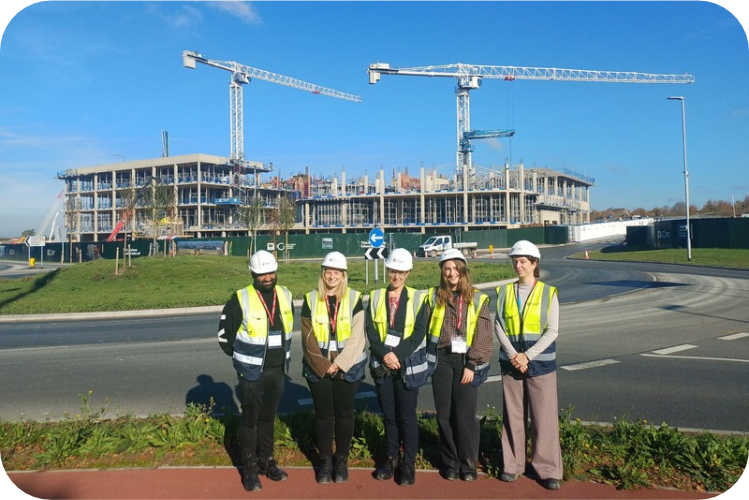
L-R: Saqib Lal, Sam Care, Jane Wall, Heloise McCulla and Aline Charpentier at The Sequence, Wellcome Genome Campus
Last Friday, the BIA team, consisting of Jane Wall, Saqib Lal, Heloise McCulla and Sam Care, visited Wellcome Genome Campus near Cambridge. After coffee and a catch-up, the crew put on their hard hats for a tour of the campus, including the building site.
The Sequence, the first of the new lab-enabled buildings, is taking shape, with the frames now up and the cranes busy overhead. It will offer 147,000 sq ft of lab space across three floors and is due to complete in Q4 2027.
Many thanks to Aline Charpentier and everyone at Wellcome Genome Campus for hosting the team!
AbbVie Discovery Centre opening in Oxford
Tomorrow I shall be in Oxford at the opening of AbbVie’s new discovery R&D centre. The event will bring together AbbVie staff, academic collaborators from the University of Oxford and members of their European ventures network to mark this special occasion and celebrate the partnerships that are so important to their work.
This new Oxford site represents AbbVie’s growing commitment to UK research and to meaningful advances for patients. It is another vote of confidence in our ecosystem, with all the spill-over benefits that brings for biotechs and CROs.
Health data: industry discussions at the GAN dinner
Last Tuesday, 20 of our Corporate pharma members joined us for the twice-yearly Government Affairs Network dinner. The conversation centred on the Health Data Research Service, with COO Chris Schonewald setting out where it stands and the importance of industry collaboration and co-creation.
Members were clear about what they need to engage. We also shared where BIA goes next and took an honest and upbeat read on the UK from pharma's global vantage point. Progress is being made but, ultimately, it is the delivery of data, trials and adoption that will really move the needle.
Engaging rare disease stakeholders
I am looking forward to meeting the RDIG General Managers on Tuesday. The dinner will include Nick Crabb, Chief Scientific Officer at NICE, Helen Knight, Director of Medicines Evaluation at NICE, and Julian Beach, Executive Director, Operations at MHRA.
Rare conditions policy: Genetic Alliance UK sets out priorities
Genetic Alliance UK’s Future for Rare: A new vision for rare conditions policy in the UK sets a clear agenda for governments across all four nations.
The report brings the rare community’s priorities into focus, drawing on a UK-wide survey, a call for evidence and 11 expert working groups. It sets out 14 principles for better lives with rare conditions.
The call to governments is clear:
- Renew the UK-wide policy framework and appoint a National Clinical Lead for rare conditions in each nation.
- Resource a national core data offer and embed diagnostic capability across the health system.
- Organise care through sustainable clinical networks and establish an annual national patient experience survey.
Genetic Alliance UK has written to health ministers in all four nations, calling for a renewed UK-wide rare conditions policy before the current Framework ends. The report sets out what that policy could deliver for each nation and for people living with rare conditions.
MHRA engagement: practical solutions for biotech SMEs
Last week we visited the MHRA offices in Canary Wharf to meet with their leadership team. We discussed next steps following the launch of their new strategy, including plans to roll out a new voucher scheme for UK SMEs, providing targeted support to enable innovative biotechs to engage early with the regulator.
We also discussed plans for the upcoming MHRA-DIA Global Summit taking place during London Life Sciences Week, and BIA's Future of Regulation and Access UK on 3 December. Both events are shaping up very nicely, with excellent speakers and jam-packed programmes.
Clinical trials: BIA policy update for biotech SMEs
This month’s lab bench to front bench focuses on clinical trials. Our policy team will explain how BIA has worked over the past year with members and policymakers to support improvements, alongside the National Institute for Health and Care Research (NIHR). The session will keep the needs of biotech SMEs in sharp focus.
Navigating Digital Skills: Community Connects webinar on 4 November
Join our next Community Connects webinar on Wednesday to explore how your organisation can build digital capability and prepare to adopt digital tools.
Digital capability is becoming a core business requirement across life sciences. This practical session brings together experts and company representatives to help organisations assess their skills needs and decide where to act next. For biotech SMEs, choosing suitable training and finding funding can be the immediate hurdles.