CEO blog: UK leads the world at London Life Science Week; record fundraises and dealmaking; bioProcessUK brings manufacturing centre stage

Chris Molloy
CEO, BIA
Dear colleagues,
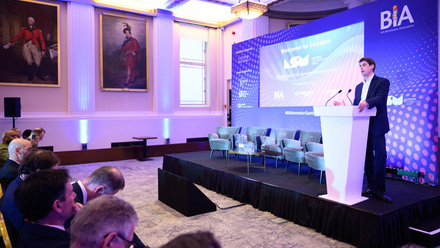
Welcome to the Monday after a huge week for UK life sciences. Today, we reflect on how this year’s London Life Sciences Week is shaping the present and future for life sciences in the UK. Leaders from across global delegations, investors and governments gathered in London for the fastest growing, most enjoyable, and productive week in worldwide life sciences.
As a collective across BIA, OLS, London & Partners, ministers and the MHRA, with platinum sponsor Jeffries, we ran an authentic showcase for the best of British biotech. We did so with sophisticated discussions on science, data, regulation, investment, pensions, licensing, geopolitics and partnering in over 100 events that gathered over 5,000 people.
The UK demonstrated how our national creativity and connectedness gives us advantage. We have earned our global reputation for taking unbeatable science and growing real value for investors and patients.
Increased assurance in all areas of UK life sciences was demonstrated by a series of major announcements including, the largest ever life sciences VC round with Isomorphic Labs – a crucible of TechBio – alongside the British Business Bank (BBB) announcement that its UK life sciences funding has exceeded £1.1 billion. Other major deal announcements added confidence across the sector from the expanded collaborations between Vertex and Genomics Ltd, plus TRIMTECH and Biogen. London itself attracted a £100 million early-stage ecosystem investment from Flagship Pioneering, their first company origination funding outside the US.
There is undoubtedly an increased belief in the long-term returns from the sector. We know that this meeting has created new partnerships, fund raises and deals that will flow into 2027. It has also crystallised timely actions that are needed from government, funders and regulators to maximise our performance
bioProcessUK 2026 brought sharp insights and focussed value to the hundreds of attendees gathered in Brighton to discuss the ongoing transformation and expansion of the UK advanced manufacturing sector. From global partnering and regulation to national policy, grants and technology adoption, this unparalleled gathering of the UK life sciences manufacturing community was warm, collegiate and productive.
bioProcessUK delivered a showcase of our 10-year strong talent programmes. our new report on national manufacturing capability, and the data sources we are developing to share best practice. Finally, we bade a fond retirement farewell to Netty England MBE, our rock in bioprocess who is leaving an unmatchable legacy in the sector.
We showed the world how UK life sciences works, why it works and what it delivers. Rich in content, creative and communal with affordability and great purpose. This week truly catalysed a wave of confidence and action for us all into 2027.
In this update:
- London Life Sciences Week: turning investor connections into UK growth
- Major deals underline the strength of UK life sciences
- bioProcessUK: building UK biomanufacturing capacity
- British Business Bank life sciences backing passes £1 billion
- MHRA shows strength on gene therapy and regulatory advice
- UK-EU reset retains UK’s pro-innovation approach to precision breeding
London Life Sciences Week: turning investor connections into UK growth
The UK’s ambition to lead Europe’s life sciences economy by 2030 needs capital behind it. At our International Investor Summit, I made a straightforward invitation: “Please, bring your money here. We’ll spend it well.”
Delivered with the UK Government, the summit brought over 200 active life sciences investors from around the world. Science Minister Chris McDonald MP affirmed that ambition, while the British Business Bank’s Leandros Kalisperas pressed the case for more capital, including from UK pension funds. Investors recognised the strength of our regulator and health data. They also highlighted the time needed to open clinical trial sites. These all deserve focused action.
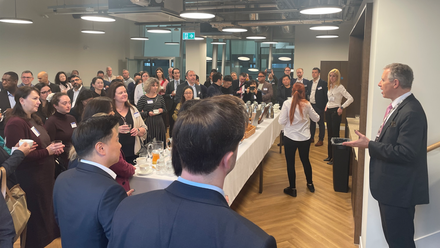
Across London, the week gave founders opportunities to put their science in front of potential backers. Our international delegation gatherings helped deepen relationships across borders. The value comes next: follow up with a clear objective and agree what each side will do to move the relationship forward.
You can read our day one, two and three summaries, as well as our six key messages that we and our partners delivered to our international guests across the week.

We were delighted to see so many of you turn out for our Women in Biotech pink picture, which celebrates solidarity with diversity and inclusion in life sciences. Through initiatives like the Women in Biotech network, BIA is proud to be taking concrete steps to support member companies. Sign up for our next Women in Biotech event, taking place in London on 8 December. We’ll be exploring how ‘growing your confidence’ was a thread through the programme – learning and exploring ways of communicating expertise and experience.
Major deals create momentum and confidence in UK life sciences
The deals that came out of last week demonstrate the UK's ability to attract both major international investment and strategic partnerships with global pharmaceutical companies. Isomorphic Labs’ $5 billion (£3.8 billion) Series C financing, the largest ever fundraise for a UK TechBio company, TRIMTECH’s collaboration with Biogen, which carries potential payments of up to $411 million (£313 million), and Eli Lilly’s acquisition of LoQus23 Therapeutics in a deal worth up to $725 million (£554 million).
Together, these deals demonstrate the breadth of innovation being developed across the UK, from AI-enabled drug discovery and targeted protein degradation to novel therapies for neurodegenerative and genetic diseases.
The scale and diversity of these transactions reflect the UK's position as a leading location for life sciences innovation, where world-class science, entrepreneurial talent and a supportive ecosystem continue to generate companies with global potential. As these businesses grow, partner and secure investment, they reinforce the UK as a place where scientific breakthroughs can be translated into medicines, technologies and economic growth.
bioProcessUK: building UK biomanufacturing capacity
Biomanufacturing is where scientific progress becomes a reality and bioProcessUK has for many years been where we've tackled the challenges of physically creating highly innovative medicines and solutions. BIA is proud to be the home of this incredible community, and, once again this year, the conference showcased the best and brightest discussing the future of biomanufacturing and the challenges ahead.
Congratulations to Angela Osborne, Founder and Board Director at eXmoor Pharma, on the Peter Dunnill Award, Autolus Therapeutics on the Richard Wilson Impact Award and Anna Thomlinson for winning Apprentice of the Year.
We took the opportunity to celebrate Netty England MBE and the part she has played in the conference over many years, recognising her support for the sector and next generation of bioprocess leaders and her role in convening the BIA Covid-19 manufacturing taskforce.
For everyone leaving Brighton, keep those new partnerships moving: identify the capability you need and the person who can help you build it.
British Business Bank life sciences backing surpasses £1 billion
At our International Investor Summit, the British Business Bank’s CIO Leandros Kalisperas announced that its life sciences funding has reached £1.13 billion. Its recent €58 million commitment to Sofinnova Crossover Fund II adds support for a late-stage, growth-oriented fund.
This is the action we need: deeper pools of capital that help promising companies scale and stay in the UK. The Bank’s role in backing specialist funds, alongside direct company investment, makes it an important partner in closing the growth capital gap and boosting market activity.
MHRA shows strength on gene therapy and regulatory advice
Last week, Government confirmed plans to update the definition of gene therapies so the rules reflect how these medicines work, not simply how they are made. That should give developers greater clarity on the route to patients. Good regulation makes great science easier to back.
BIA welcomed these plans in our response to the consultation earlier this year, which align with the key revisions in the EU’s updated GTMP definition, with a few differences which aim to provide greater alignment and consistency. The next step is to turn these changes into legislation and provide practical guidance for developers.
Meanwhile, at the DIA-MHRA Global Summit, Science Minister Chris McDonald announced new MHRA support for innovators developing advanced technologies for medicines manufacturing, through the AdvanceGxP programme. Funded by the Office for Life Sciences, the MHRA service will help developers address regulatory and quality questions earlier, including for personalised treatments made close to patients and technologies using AI or automation.
I joined the summit’s closing plenary to discuss the UK’s strengths, including the role of regulation in attracting investment and driving forward life sciences innovation.
If you’re interested in exploring this topic further, make sure you join us at our annual Future of Regulation and Access UK conference on 3 December. Speakers including Sam Roberts, Managing Director of Syncona Investment Management, will explore how regulation, reimbursement and healthcare adoption must work together to support innovation and patient benefit in the UK.
UK-EU reset retains UK’s pro-innovation approach to precision breeding
As part of the UK-EU Summit on Friday, Andy Burnham secured a carve-out for precision breeding in the Sanitary and Phytosanitary (SPS) agreement, meaning UK biosolutions companies can continue develop and market their innovative crops and novel food products.
This largely delivers what BIA has been calling for: to maintain the UK’s pro-technology approach to regulation, rather than be held back through “dynamic alignment” with Brussels. However, the detail shows a compromise. We can continue our current regulatory approach permitting precision bred crops, cultivated meat and precision fermented food until October 2029, when the EU proposal to these products will come into effect. The EU’s proposition is currently in development is almost analogous to ours, so while it’s a small step backward for UK innovators, overall a single consistent approach will help companies and innovators across Europe.
We’ll continue to engage with both UK and EU policymakers to maintain a pro-innovation approach to regulation as the political relationship continues to evolve and legislation is developed.
Public support for engineering biology confirmed by new study
Engineering biology in the UK improves lives, and precision breeding is just one example of the benefits it can bring – healthier and more sustainable food. A public dialogue on its governance shows clear support for the government to be bold in promoting the technology.
BIA formed a part of the oversight group for the study over the past year to bring in industry views alongside academia and public bodies. Its corresponding report was published last Monday.
Participants in the study want long-term funding and confidence that the benefits the sector has to offer will be felt in the UK. Engineering biology is a frontier technology in the Industrial Strategy, with applications ranging from new medicines to materials.
Government should act on the report’s findings through proportionate, innovative-friendly regulation and meaningful ongoing public involvement. Businesses have a part to play by explaining their work clearly and listening to the people it could affect.