Ensuring equity for people living with rare conditions in the UK

In this blog, Emily Klein, Senior Policy and Public Affairs Executive at BIA, reflects on the importance of Rare Disease Day in bringing visibility to those affected by a rare condition and serving as a focal point for advocacy in this space. It draws on insights captured from BIA’s parliamentary reception held in the lead-up to Rare Disease Day, where stakeholders came together to discuss progress and opportunities for change.
Two weeks ago, BIA hosted a reception in the House of Commons to mark the launch of our new report on unlocking patient access to innovative rare disease medicines. The event took place ahead of Rare Disease Day (28 February), an important annual moment to highlight the unique challenges faced by people living with rare diseases and to champion equitable access to timely diagnosis, specialist care and effective treatments for the 3.5 million affected across the UK.
With equity as the central theme of Rare Disease Day 2026, the event provided a timely opportunity to reflect on the persistent inequities faced by the rare disease community and the urgent action needed to address longstanding barriers.
Putting rare diseases on the parliamentary agenda
The event brought the issue of rare diseases into the heart of Parliament, connecting MPs and peers with patient advocates, industry leaders and policymakers from across the health and life sciences ecosystem under a shared commitment to drive system wide improvements for people living with rare conditions.

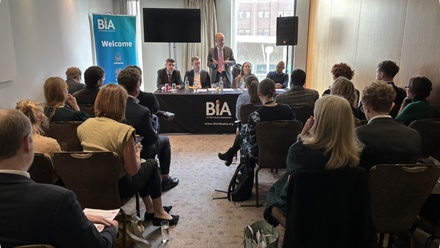
The reception opened with a series of speeches from Liz Twist, Labour MP for Blaydon and Consett, the host of the event, Kylie Bromley, General Manager at Biogen and Chair of BIA’s Rare Disease Industry Group (RDIG), Julian Beach, Interim Executive Director for Healthcare Quality and Access at MHRA, and Rebecca Torricelli, Stories Officer at Muscular Dystrophy UK.
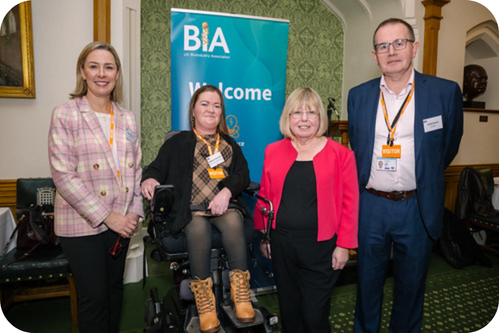
Speakers at BIA’s parliamentary reception featuring (L-R): Kylie Bromley (Biogen), Rebecca Torricelli (Muscular Dystrophy UK), Liz Twist (Labour MP) and Julian Beach (MHRA)
It was encouraging to hear about MHRA’s plans for a new regulatory pathway for rare disease therapies – an important step toward developing bespoke, risk-proportionate assessment approaches that reflect the inherent challenges associated with small patient populations and high levels of data uncertainty.
Hearing Rebecca share her personal experience of living with Spinal Muscular Atrophy (SMA) was poignant. She spoke powerfully about her journey from diagnosis to life today, highlighting the many hidden yet significant challenges that shape day-to-day living and her perspectives on the transformative impact that timely treatment intervention can have.
Rebecca’s reflections underscored the reality that for people with rare, progressive conditions, even small improvements in function or quality of life can be transformative and that the value of these gains should never be undervalued.
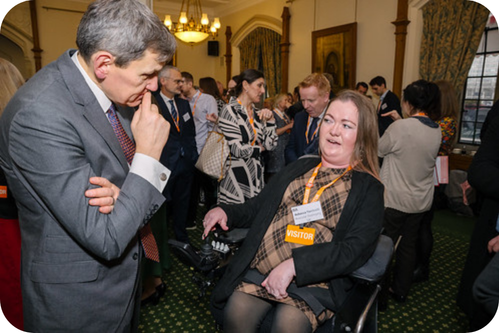
Kit Malthouse MP, Chair of APPG for Life Sciences, speaking to attendees at the reception
Capturing the full impact of rare diseases, on individuals, carers and wider society is hard to quantify. BIA’s recent review of published evidence across ten rare conditions estimates that the socioeconomic burden associated with a rare condition in the UK is approximately £70,000 per person per year, which is around eight times higher compared to common conditions. This reinforces the need to ensure that existing frameworks capture the full value new medicines can provide in reducing the overall impact of these conditions.
Strengthening collaboration
Our parliamentary reception followed the publication of BIA’s latest report on rare disease medicines, which outlines four priority areas for reform and nine practical policy solutions to deliver equitable access to medicines for patients with high unmet need. The event provided space to discuss these solutions directly with UK experts and stakeholders.
There was strong consensus on the need to seize the UK’s opportunity to lead globally in rare disease innovation and access, and on the importance of fostering greater collaboration to ensure that access pathways are truly joined up and reflect the realities of small patient populations and high evidential uncertainty.
This year, BIA is proud to have Muscular Dystrophy UK (MDUK), the UK’s leading charity for people living with muscle-wasting conditions, as its charity partner for 2026. Through this partnership, BIA will leverage its network across the UK life sciences sector to amplify the voices of those affected by muscle-wasting conditions and champion the importance of timely diagnosis and access to new medicines.
Our partnership with MDUK is an important example of the collaborative approach needed to deliver meaningful change. Bringing together patient insights with industry expertise is essential to ensure that policy decisions are grounded in lived experience and that scientific progress translates into positive impact for patients.
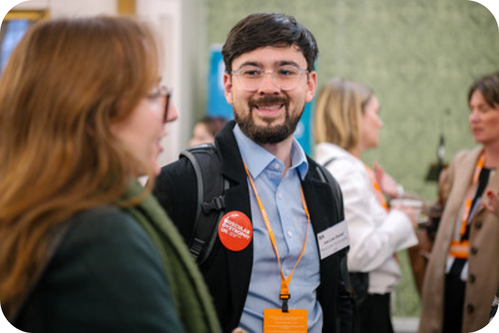
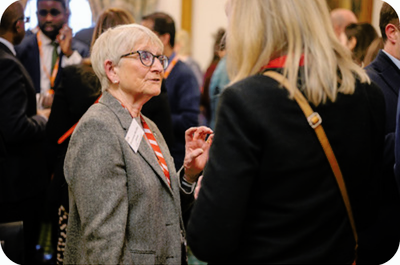
Muscular Dystrophy UK colleagues at the BIA parliamentary reception
Turning momentum into action
The reception served as a timely reminder of both the strength of the UK’s rare disease community and the work still needed to deliver urgent change.
Translating the momentum created at the event into action is imperative. Through RDIG, BIA will continue to work closely with partners across the rare disease ecosystem to progress the solutions in our report and to champion a collaborative system that supports innovation and delivers better outcomes for all those affected by rare conditions.