Insights from emerging CGT leaders: tech transfer and funding pressures

In this guest blog, Dan Stanton, Trade Media Expert at Sartorius Bioprocess Solutions, discusses how tight funding, manual tech transfer and product specific analytics are keeping cell and gene therapies (CGTs) from realising their potential.
Tight funding, manual tech transfer and product specific analytics are keeping cell and gene therapies (CGTs) from realising their potential, according to a gathering of future leaders of the UK life sciences sector.
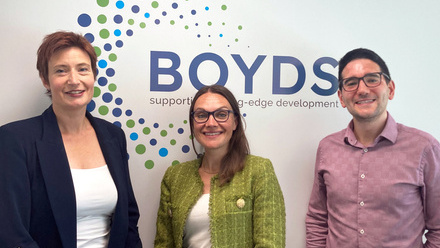
The concerns arose among representatives from start-ups, contract development and manufacturing organizations (CDMOs), and technology providers during a roundtable discussion held in March at a Sartorius facility in Royston. The representatives are all participants of the BIA Manufacturing Advisory Committee Leadership Programme (MAC LeaP), a programme run by the BioIndustry Association (BIA) designed to empower emerging leaders in the biopharmaceutical and cell and gene therapy sectors. Focusing on professional growth, cross-sector insights and peer networking, LeaP provides the tools, knowledge and connections needed to thrive in a rapidly evolving industry. Participants on the programme designed and led the roundtable.
Challenges
Funding was identified as the dominant pressure shaping decision-making across the sector. One delegate, describing their company’s position ahead of a Series C raise, explained that the difficult investment climate was forcing manufacturers to prioritise cost reduction above almost everything else. “The macro and economical is not great out there because there are simply not enough investments being done in cell and gene therapies as a modality,” they said. And where there is funding, it demands lower cost, more automated processes, and more closed processing systems. “The fewer errors that operators do, the cheaper it will be to get your batches out there to the patients.”
The squeeze for CDMOs in the space comes from being caught between clients pushing for lower costs and businesses unable to fund the automation upgrades that would make those savings possible. Last-minute schedule changes and unrealistic staffing assumptions were cited as common flashpoints, with one representative warning that agreeing to every client request – in an industry where it feels as if “any sort of business is good business” – was creating significant operational stress for manufacturing teams.
Tech transfer, specifically, was identified as a stubborn bottleneck. Unlike small molecules or monoclonal antibodies, where established platforms and institutional knowledge have matured over decades, CGTs remain so product-specific that a standard handover between sponsor and CDMO is rarely sufficient. A repeated cycle of back-and-forth between clients and third-party manufacturing teams stretch well beyond initial training runs, a process described by one thought leader as consuming time and budget with no clear structural solution in sight.
The analytics burden drew equally sharp comment because defining potency for advanced therapies typically requires multiple cell-based assays rather than a single readout. Thus, the cost of release testing is structurally high and difficult to compress. One delegate raised the idea of a cross-industry consortium to co-develop broadly applicable analytical methods, pointing to sterility testing as one area where standardisation might be feasible. However, the broader response was sceptical with delegates agreeing that most analytical challenges are simply too product-specific to yield to a shared solution, and the pace of innovation within the sector means any standardisation risks obsolescence before it is adopted.
Reasons for optimism
But despite the difficulties, delegates pointed to genuine reasons for optimism: emerging platform approaches to drug delivery, the rapid development of in vivo alternatives to ex vivo cell therapy, and growing interest from AI-assisted product design.
In vivo reprogramming is drawing pharma attention because it avoids the whole vein-to-vein grind and turns cell therapy into something closer to a scalable drug product. Deals like Lilly’s $2.6 billion acquisition of Orna Therapeuitics, or Gilead’s $350 million buyout of Interius are examples of the shift. Meanwhile, early AI work in capsid engineering and delivery design is starting to surface, with a few companies (Dyno Therapeutics for example) already using models to explore sequence space and sharpen vector targeting.
The consensus among the delegates was that the structural problems are real but not insurmountable. The BIA continues to play a pivotal role in creating meaningful spaces for the sector to connect, collaborate and share real‑world experience. The LeaP programme is a strong example of how multi‑company engagement can bring emerging leaders together and spark the kind of cross‑sector dialogue the CGT community needs to thrive.
This is a guest blog. Its author is responsible for content within it, which does not necessarily reflect the opinions or positions of BIA.