In this edition:
-
An update on our influence activity in May
-
A spotlight on how BIA is improving the UK tax system for our members’ benefit
-
What we've been reading and listening to
-
What's coming up across BIA Policy and Public Affairs.

Lewis Miles, Policy and Public Affairs Manager, and Maddy Anderson, Senior Policy and Public Affairs Executive
Engagement with Government and Parliament
May brought significant change for BIA’s key contacts in government. The resignations of Wes Streeting and Zubir Ahmed, both citing lost confidence in the Prime Minister, introduced new faces at the top of a department, all at the same time as the health department delivered a significant new legislative agenda. James Murray, previously Chief Secretary to the Treasury, was appointed Secretary of State for Health and Social Care, while Preet Kaur Gill replaced Ahmed as Health Innovation and Safety Minister a portfolio with direct relevance to BIA members. We have wasted no time making contact. BIA has a relationship with Murray from his time as minister responsible for R&D tax relief and we were pleased to see his first industry engagement was with BIA member Relation, whilst Gill has agreed to meet with us in the coming weeks.
In case you missed it:
-
BIA's 26th annual Parliament Day brought 40 senior life sciences and biotech representatives to Westminster and Whitehall to make the case for the sector directly to MPs, ministers, peers and senior civil servants. The day centred on four priorities: unlocking domestic capital, harnessing health data, strengthening clinical trials, and ensuring patient access to innovative medicines. We'll be publishing a full post-event breakdown shortly.
-
We launched our health data vision 2035 report endorsed by Dame Kate Bingham, co-developed with BIA’s Data, AI and Genomics Advisory Committee, setting out how the UK can harness its world-leading health data as a strategic national asset to drive economic growth, improve patient outcomes and support long-term NHS sustainability. But the work doesn’t end there - watch this space for updates on how we're using the report to shape strategy with key stakeholders across government and the UK’s data cohorts. We also informed a new parliamentary briefing on health data and submitted to the House of Lords inquiry on Innovation in the NHS: personalised medicine and AI.
-
The House of Lords Science and Technology Committee's personalised medicine and AI inquiry continued this month, with our members’ input. BIA member companies and sector figures repeatedly reinforcing priorities at the heart of BIA's policy agenda: scale-up investment, health data, clinical trials and patients’ access to medicines. BIA members Autolus, Genomics, Brainomix and Scancell gave evidence on the gap between world-class UK science and its translation into patient benefit and economic growth. An earlier session also featured Chris Molloy in his capacity as outgoing CEO of the Medicines Discovery Catapult, ahead of joining BIA, on barriers facing UK SMEs and the importance of health data infrastructure.
-
BIA continued to engage with the Office for Life Sciences and British Business Bank on strengthening the evidence base for investing in UK biotech. We met with senior officials this month to advance the case that life sciences delivers strong ROI - a compelling data point as Government considers how best to deploy patient capital into the sector.
-
On growing BioSolutions, Linda Bedenik convened a UK-EU stakeholder roundtable in Brussels ahead of the European Biosolutions Coalition (EBC) Summit. The discussion focused on GMO regulatory frameworks that are failing to keep pace with the science. With the EU Biotech Act II and a wider EU–UK reset on the horizon, BIA is actively working to shape the cross-European BioSolutions agenda whilst keeping the UK at the cutting edge.
-
Maddie Cass was hosted by the Chief Scientific Adviser for Wales to deliver a presentation on engineering biology to their Research and Innovation Strategic Engagement Group. She covered the range of disruptive technologies being developed by UK SMEs and explained the barriers preventing these innovations from reaching the market.
-
On the skills agenda, BIA convened a roundtable of members and policymakers to feed into the government’s Life Sciences Jobs Plan. The session, chaired by Skills England, drew constructive engagement from industry panellists and generated feedback strengthening the impact of BIA's own written submission. BIA also ensured member input on the global talent digital journey, and continued dialogue with the government’s Global Talent Hub to inform future policy action to ensure government action reflects future workforce needs.
-
BIA CEO and Chair visit Belfast to champion Northern Ireland's life sciences ecosystem Chris Molloy and Shaun Grady joined sector leaders in Belfast this month, engaging with HIRANI and the Academy of Medical Sciences on health equity and the opportunities presented by NI's rapidly growing innovation cluster, backed by a £1.8bn investment programme.
-
BIA responded to NICE's consultation on adopting a new quality-of-life measurement tool used in health technology assessments, the EQ-5D-5L value set. While supportive of the rationale for updating the methodology, BIA raised concerns that the new value set could worsen existing barriers to patient access — particularly for rare, disabling and life-long conditions. BIA called for a phased approach allowing both value sets to run in parallel, alongside clearer guidance on when alternative measures are acceptable.
-
The team also submitted evidence to the Business and Trade Committee's inquiry into UK-US trade, reiterating support for the recent agreement and its role in protecting the sector from damaging pharmaceutical tariffs. BIA also flagged the upcoming VPAG scheme review as an opportunity to align policy in support of innovation and investment - with particular emphasis on helping UK companies scale and stay here.
-
We welcomed the launch of the consultation on MHRA’s proposed new regulatory framework for rare diseases. BIA was part of the MHRA’s Rare Disease Consortium formed last year to support the development of this new framework. MHRA’s leadership in this space will drive investment across the sector and we look forward to engaging in coalition efforts to develop a new pathway to patient access for these lifesaving medicines.
Spotlight: Improving the UK tax system for our members’ benefit
A pro-innovation and pro-entrepreneurship tax system is essential to the health and growth of the UK life sciences sector, so ensuring that tax schemes are fit for purpose and work for, rather than against, our sector is always a priority.
BIA’s close engagement with HM Treasury and HMRC aims to ensure they understand the intricacies of our sector, which, without proper consideration when designing new policies and administering tax, significantly harm members and UK economic growth.
Through government and member engagement, our work has influenced policy and legislation, ensured that the needs of SMEs and the wider sector remain front of mind at the highest levels of government, and helped mould the tax system into a form that truly supports UK life sciences.
Protecting and improving R&D tax reliefs
BIA members regularly cite R&D tax reliefs as the most important support they receive from the government. Crucially for pre-revenue companies, they reduce the cost of investing in R&D with cash payments, thus incentivising private investment and providing cash flow into start-ups and scale-ups.
BIA’s campaign to ensure the government’s ongoing support for these reliefs has been long and eventful, and we’ve played a significant role in many of the key decisions impacting the reliefs over the years. Most significantly, we secured a U-turn from Chancellor Jeremy Hunt when he tried to remove the higher rate enjoyed by R&D intensive SMEs in 2022.
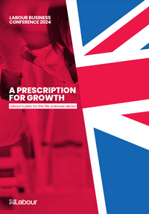
With the current government, we secured a commitment to maintain the relief rate in Labour’s pre-election plan for the life sciences, A Prescription for Growth. A commitment that we were able to hold the government to ahead of the 2024 Autumn Budget, in a campaign supported by 150 BIA member CEOs who cosigned our letter to the Chancellor.
Following the government’s reassurance that the reliefs will be maintained at the current rate, our more recent work has focused on making sure that the reliefs are working as efficiently and effectively as possible for members.
Making HMRC work better for members
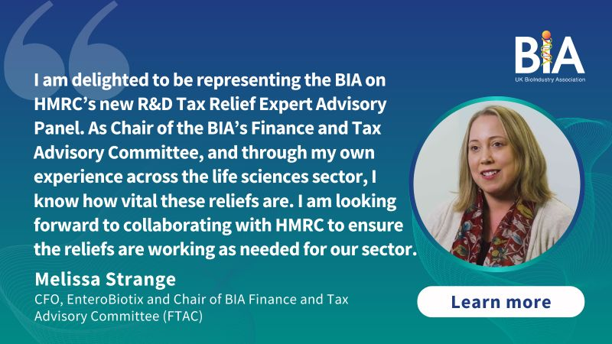
We cultivate a strong and influential relationship with HMRC. Recently, the Chair of BIA Finance and Tax Advisory Committee (FTAC), Melissa Strange, has been appointed to HMRC's R&D Tax Relief Expert Panel. Comprised of six experts, the panel will provide industry insights and guidance to support HMRC’s administration of R&D tax reliefs.
To bolster this, BIA delivered a training workshop to frontline HMRC operational staff, providing insight into our sector, and how it benefits from and interacts with R&D tax relief. We will build on this productive relationship, providing member feedback on areas for HMRC improvement, repeating workshops, and having tax officials attend BIA events so that they can engage directly with those members, such as at our recent startup festival.
Advance assurance to give members more confidence
Another element of the reliefs that has long been on the BIA radar is the Advance Assurance scheme, which we actually helped create many years ago. BIA recently played a direct role in improving it further for the sector.
The Advance Assurance scheme allows a company to ascertain whether its claim is eligible for relief before formally submitting. However, as outlined in BIA’s consultation response, the current scheme is less useful for life science companies as they are typically rather certain that their work qualifies as R&D. What would be more useful for these companies is the ability to check certain aspects of their claim, such as overseas expenditure and research intensity.
Following our submission, the government has announced the launch of an R&D Advance Assurance pilot that will run for 12 months beginning 18 May. This new pilot will give eligible businesses clarity on more specific areas of an R&D tax relief claim, including whether overseas expenditure will apply for relief.
Shaping the broader tax landscape to drive investment
Many other elements of the tax system are valuable to our sector, and form a significant focus of BIA’s work.
Following extensive BIA campaigning, in April 2026, we welcomed significant changes to both the Enterprise Management Incentives (EMI) and the Enterprise Investment Schemes (EIS) and Venture Capital Trusts (VCTs).
Announced in the Autumn Budget, the schemes have been expanded with significant increases to investment and asset limits, allowing them to support more companies as they scale and grow beyond the previous fundraising limits.
Taken together, these changes are expected to support around £100 million of additional investment a year and will make the schemes far more suitable, and far more useful, for UK life science companies.
The work continues
These changes represent another significant step within a sustained effort to ensure that the tax system is working for the UK’s most innovative companies – an effort that BIA has been at the forefront of for many years.
However, there is always more to be done. HM Treasury’s recent Tax Support for Entrepreneurs: Call for Evidence gathered views and evidence on tax policy support for investment in start-up founders and high-growth companies.
BIA submitted a response to this call, recommending further changes calling for the government to:
-
Enhance R&D tax reliefs by restoring the ERIS credit rate to 33p/£ and ensuring the system is running as efficiently and effectively as possible.
-
Simplify and modernise EIS, VCT and EMI to remove technical traps and introduce consistent definitions
-
Improve incentives to attract and retain talent by expanding EMI limits and introducing a National Insurance exemption for innovative companies.
-
Develop incentives to anchor innovation and high-growth companies in the UK by incentivising reinvestment of gains into qualifying growth businesses.
HM Treasury says this consultation was the start of an ongoing process to review the entirety of the tax system’s support for entrepreneurship. We will continue to work closely with members and policymakers to ensure that any changes work for the life sciences sector, and so, with this in mind, it is likely that the schemes most relevant to you will be receiving additional changes in the not-too-distant future!
This month's picks from the Policy and Public Affairs team
-
Opinion: Britain excels at discovery but struggles to turn it into growth and social benefit. Senior figures from research, the NHS, industry and academia set out why the UK's scientific strength isn't translating into economic growth, and what needs to change.
-
Briefing on Single Patient Record provisions in the Health Bill. The Association of Medical Research Charities (AMRC), Understanding Patient Data, and National Voices have developed a briefing for parliamentarians on the Single Patient Record (SPR) provisions set out in the Health Bill ahead of its second reading last Monday.
-
What the UK Biobank data exposure should mean for the Health Data Research Service. The PHG Foundation argues that recent incidents in which UK Biobank volunteer data was inadvertently exposed online and subsequently appeared for sale on a Chinese retail platform are a timely warning for the HDRS.
-
Healthcare, Reinvented: How Dramatic Medical Breakthroughs Are Quietly Changing Your Life (Professor Sir John Bell). A wide-ranging conversation on the breakthroughs reshaping how we live, age and die - from personalised cancer vaccines to AI-driven prevention. Sir John Bell also touches on the possibilities and challenges of building onshore sovereign data infrastructure to rival platforms like Palantir.
Coming up across BIA Policy and Public Affairs
Cambridge TechBio X
Our session and Q&A with Tom Lyle, Strategy Director of HDRS, will explore how industry can actively engage with HDRS to help shape its development – ensuring it meets real-world needs and becomes a powerful catalyst for innovation across the UK life sciences ecosystem. Book your ticket here.
Be featured in BIA flagship biomanufacturing directory and baseline report
We’re developing the UK’s first directory mapping CDMOs and CROs - and inviting licensed organisations to take part. It will showcase UK capabilities, support government resilience work, and provide a baseline for policy and industry. Launching at bioProcessUK. Contact Netty England to be included.
Share your regulatory challenges with government — deadline 19 June.
The Regulatory Innovation Office (RIO) is gathering evidence on the regulatory barriers holding back innovation across science and technology sectors.
The deadline to submit is 19 June 2026.
You may also be interested in


BIA Members' only