
In this edition:
- Our influence activity throughout July, from the Life Sciences Sector Plan's first anniversary to Burnham's Government updates.
- A spotlight on the UK's health data ecosystem, and BIA's work to ensure the Health Data Research Service (HDRS), the national cohorts and our health data vision 2035 deliver for innovative companies.
- What we've been reading across the team.
- What's coming up across BIA Policy and Public Affairs.

Dr Emma Lawrence, Head of Data Tech Policy and Public Affairs, and Maddy Anderson, Senior Policy and Public Affairs Executive
Engagement with Government and Parliament
Welcome to the first Lab bench to front bench of the Burnham premiership! As you'll have seen across BIA socials and CEO updates this month, the front bench now has some new occupants.
Recess began on 16 July and Parliament will not reconvene until 1 September — then sitting for a fortnight before dispersing to party conferences. BIA will be out across five party conferences this year and hosting a panel at Labour. Attending too? See below and get in touch.
Meanwhile, our team is plugging the sector's agenda back into a rewired government and pressing for continuity through the transition. Members can join our webinar this Wednesday 5 August for the detail, and read our exclusive briefing on Andy Burnham’s Government.
- One year on from the Life Sciences Sector Plan, we held Government to account for delivery – both in our feedback on its one year progress report and across a series of policy events. We helped bring together an APPG panel on the Plan's progress, where BIA CEO Chris Molloy highlighted access to finance as the key issue holding back the sector. We were also invited to the Government's official one-year-on launch, with then-Science Secretary Liz Kendall. The update reported £3 billion of new investment, average clinical trial set-up down from 169 to 122 days, and the formal incorporation of the HDRS. We welcomed real progress on clinical trials, but told Government the update lacks the ambition needed for the start-ups and scaling companies at the core of our membership. We also warned that the access-to-finance metrics used could risk signaling complacency on an issue critical to much of the sector.

APPG panel on The Life Sciences Sector Plan: One Year On (above), Former Secretary of State for Science Innovation and Technology Liz Kendall at the OLS progress report launch (below)
- The accompanying Life Sciences Sector Jobs Plan was shaped by our members' evidence on biotech's skills challenges: Through our workshops and roundtables, members set out the priorities facing scaling companies – from lab skills to AI, manufacturing and leadership. We welcomed its recognition of SME challenges but pressed for simpler routes and a stronger focus on scale-up skills. Read more.
- In a big win for our engineering biology members, BIA’s work with the MHRA and Regulatory Innovation Office is opening up a clearer route to market. The Government's updated plan for growth-focused regulation commits to publishing a regulatory map for companies developing engineered bacterial therapeutics by spring 2027 — a direct result of BIA's engagement with regulators and members to unblock the path for these technologies.
- BIA brought together innovative biotechs and Government to consider next steps on the UK's approach to nucleic acid synthesis screening, including how to work with international partners to share best practices and consider alignment. This is a core aspect of responsible innovation. Bringing in the voice of biotech innovators relying on synthetic sequences for their research and development of novel therapeutics is vital as the UK considers its approach to screening and biosecurity.

BIA hosting a roundtable with Government on gene synthesis screening
- Selected as a nominating body for a new UKRI pilot, BIA put forward 11 members to widen access to the Global Talent visa: The pilot lets research-intensive UK businesses host international researchers on the visa, opening up specialist skills across frontier technologies and the Industrial Strategy sectors.
- We co-hosted a Novel Foods roundtable in Brussels, with the European Biosolutions Coalition and Bezos Centre for Sustainable Protein, to discuss a cross-European path for food innovation. With the UK's Cell Cultivated Products sandbox ending in early 2027, EU novel foods policy under debate through the Biotech Acts, and the UK–EU reset underway, the roundtable drew on the UK's approach to shape what comes next. Getting this right means UK innovators keep their lead in sustainable protein while securing clearer, faster routes into European markets.
- BIA’s latest VC lunch connected investors with senior government figures to discuss unlocking sector capital. Guests included OLS director Kenan Poleo and Office for Investment (OFI) director Tim Newns, as well as OFI government advisers. The Sterling 20 was a key point of discussion, an investor-led partnership to channel pension funds into growing UK business.
- Before Burnham officially ran for leadership, we held two members' roundtables with Dr Zubir Ahmed MP and Lord Vallance to make the case for policy continuity. We pressed the priorities at the core of our agenda: closing the scale-up funding gap, unlocking domestic pension capital, faster NHS adoption and clinical trials, and policy continuity through the Labour leadership change. Since then, Lord Vallance, despite stepping down as Science Minister, has been appointed to chair the Prime Minister's new AI Taskforce and the Oxford–Cambridge Growth Corridor, keeping him central to government. Reaching figures who remain this influential is why the relationships we build endure well beyond any reshuffle.
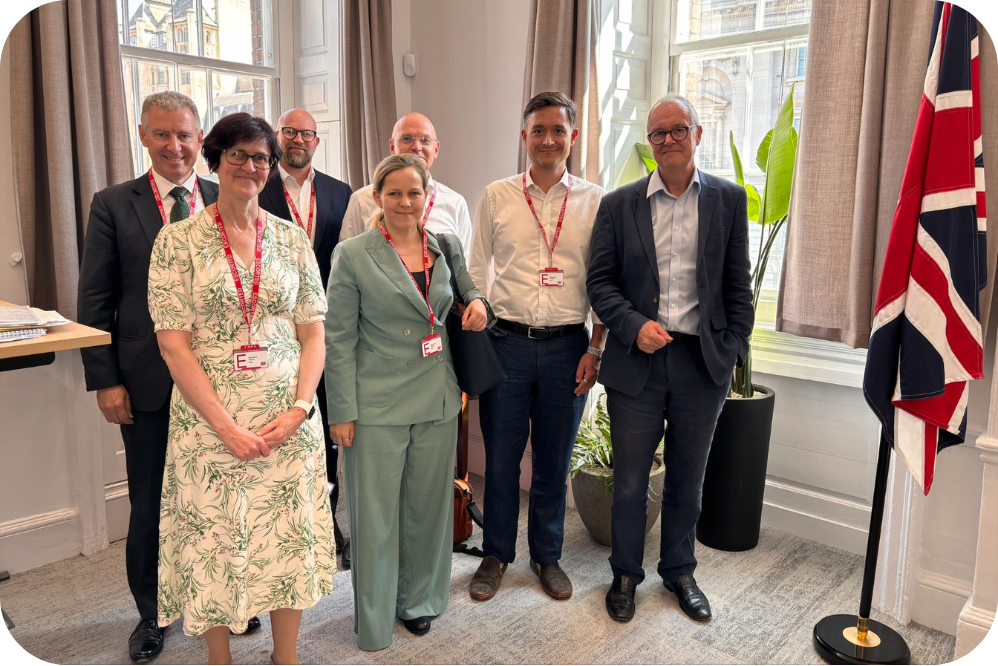
L-R: Chris Molloy, CEO of BIA, Ros Deegan, CEO of OMass Therapeutics, Peter Fish, CEO of Mendelian, Ola Wlodek, CEO of Constructive Bio, James Peach, COO of OutSee, Alex Merwin, COO and Co-founder of Outpost and Lord Vallance, Minister for Science
-
BIA responded to MHRA's consultation on proposals for a new regulatory framework for rare disease therapies. The draft framework is available here. The BIA strongly welcomes MHRA’s leadership in developing a new regulatory framework for rare disease therapies. We agree that the UK has the foundations to be a global leader in rare disease innovation and the new framework provides an opportunity to cement this. To fully deliver on this ambition, we recommend several improvements to ensure the framework is practical, attractive to developers and capable of delivering patient access.
Spotlight: the UK’s health data ecosystem
With its cradle to grave healthcare service, the UK’s health data has long been talked about as a transformative catalyst for life sciences innovation, if it can be unlocked. In 2026, that conversation is finally turning into action. We now have real movement on the HDRS, progress on linking primary care data into major UK cohorts, and a clearer articulation of what good looks like through BIA’s health data vision 2035. For BIA, the opportunity is not just to make data easier to access. It is to make sure the UK uses health data deliberately as a strategic national asset: one that improves patient outcomes, strengthens the NHS and helps innovative UK companies grow. Find out what we’ve been doing to support you...
HDRS: ensuring this new service works for you
HDRS has the potential to be a genuine step change for UK health data research. Backed by up to £600 million from government and Wellcome, led by Melanie Ivarsson, it promises a secure single access point to national-scale data that could reduce fragmentation and cut through years of bureaucracy. This matters because the UK does not lack data. It lacks a system that makes the right data available, at the right time, through the right access models, to the right people. That’s why for years we’ve called for a single front door and streamlined access process for the UK’s health data, HDRS is a direct response to this.
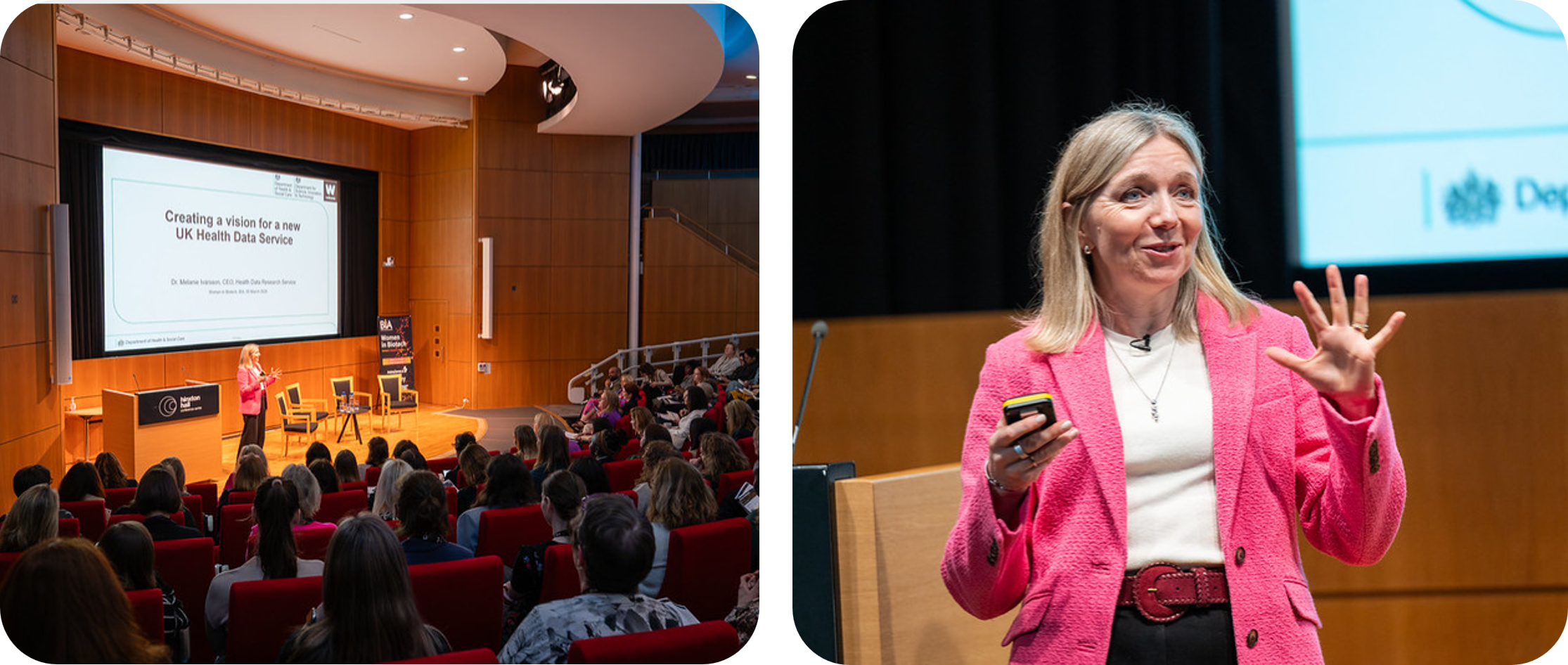
Mel Ivarsson, CEO of the Health Data Research Service, shares an early look at her plans for the service at the BIA Women in Biotech Conference
BIA has been part of the development of the service from day one. Through roundtables, workshops, meetings and the HDRS industry forum, we have consistently pushed the small and scaling company perspective; ensuring SME needs are reflected in their new strategy. In March, we collaborated on a health data breakfast for parliamentarians with the new HDRS CEO Mel Ivarsson in attendance. We also hosted a roundtable with HDRS and 10 BIA members, specifically influencing HDRS service design.


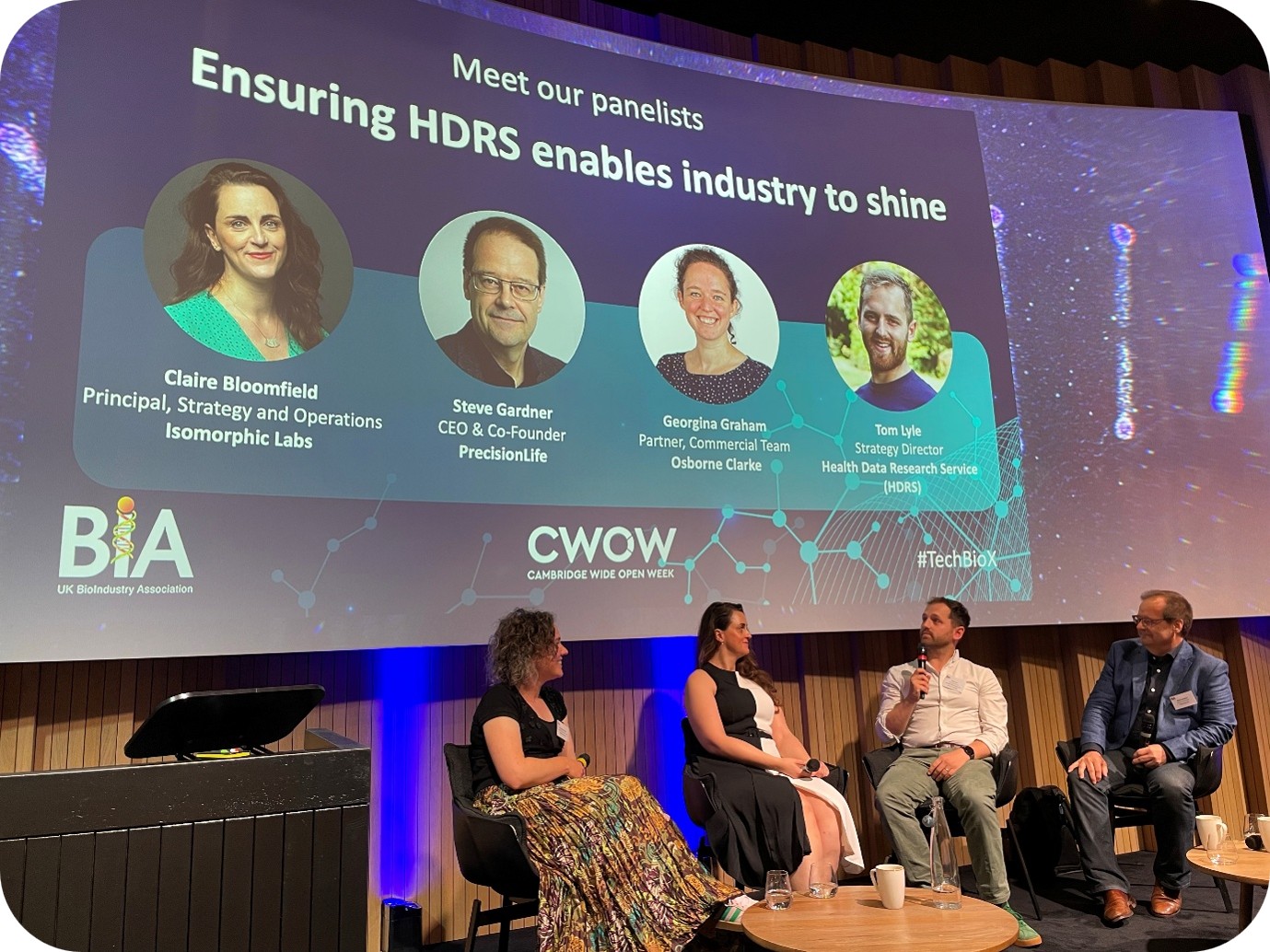
We’ve championed SMEs as the backbone of innovation in the life science sector. We hosted Tom Lyle, Director of Strategy at HDRS at our TechBio X event in Cambridge in June. He said, “...if HDRS doesn’t serve the biotech community, it would have failed”. To ensure it doesn’t, we are pushing for access to rich multimodal data, affordable access for UK SMEs, and a harmonised certified trusted research environment (TRE) model. In short, the service should not just be easier to navigate than what came before. It should be built from the outset to support UK innovation and value creation.
Getting the UK cohorts working with SMEs
Another welcome health data development this year has been the decision to allow coded primary care data in England to be shared with consented cohorts, such as UK Biobank and Our Future Health through NHS England.
Alongside this we have been supporting the UK cohorts, to get them working better for our UK innovators. In December, we hosted a webinar with Our Future Health, where members were able to feedback on their service. BIA now sits on the Our Future Health programme board, so we can represent your interests directly in this forum. We have raised their pricing as an issue and are working with them to mitigate this.
We know that the UK Biobank RAP is currently closed to the research community. Even before this happened, we have been working with UK Biobank to help them better understand the SME community. BIA sits on the UK Biobank Industry Advisory Group which meets bi-annually and attended the UK Biobank International Scientific Advisory Board to discuss your needs. In December, we supported UK Biobank in running a panel discussion on ‘Making UK Biobank Work for SMEs’, where we informed areas for improvement such as the usability of the RAP and clarity over IP terms. We are currently raising the importance of industry engagement in the review of the UK Biobank RAP.
If we want UK SMEs to build and test new products here, they need access to world-leading data assets that reflect real-world care. That is why our engagement with UK Biobank, Our Future Health and other national cohorts matters. These infrastructures are not peripheral to the UK life sciences offer; they are central to it.
BIA’s health data vision: from fragmented assets to a coherent national strategy
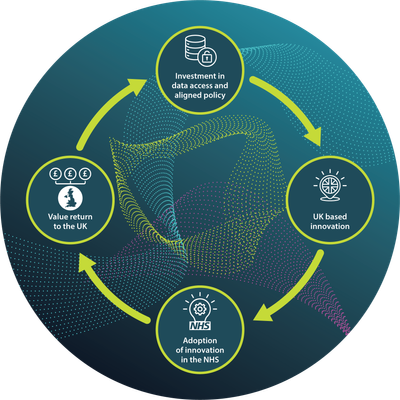
This is the context for BIA’s health data vision 2035. Our seminal report, published in May, sets out how the UK should treat health data as a strategic national asset. The report outlines current global trends and how UK health data can support Government's shift to preventative and precision medicine. Endorsed by Kate Bingham and shared with Government and other key stakeholders, we will continue to use this report to influence UK health data policy. For example, the report informed a new parliamentary briefing on health data and the House of Lords Science and Technology Committee’s inquiry on personalised medicine and AI.
If we get this right, health data can support better care, a more sustainable NHS and faster UK-based innovation. We will continue to play a role in shaping the ecosystem. Through our work on HDRS, our role with the UK Cohorts, and our health data vision 2035, we are pushing for systems that genuinely work for UK innovators. But none of this will happen by accident. The decisions made now on governance, pricing, access and infrastructure will determine whether the UK delivers on its data advantage. That is the prize, and why BIA continues to play an active role in shaping this agenda.
Kate Bingham
Managing Partner, SV Health Investors

This report is right to identify health data as one of the UK’s outstanding assets. We have world-class science, a single-payer health system and the potential to generate clinically meaningful insights at national scale.
But we have not yet turned that advantage reliably into scaled UK companies, sustained domestic investment or faster patient benefit. Too often, the value created by UK science is captured elsewhere.
The priority now is execution: enabling UK innovators to build, finance and grow their companies here. If we get this right, we can attract much greater global investment, strengthen the UK life sciences sector and, most importantly, give patients earlier access to better treatments and better outcomes.
This month's picks from the Policy and Public Affairs team
- A Framework for Frontier AI and the Dawning of a New Age – Demis Hassabis. Google DeepMind's CEO argues that AGI is only a few years off and proposes a US-led standards body to test frontier models before release, modelled on financial-sector self-regulation. A useful sighting of where AI governance, and the bio-risk questions that travel with it, may be heading.
- Understanding Patient Data in 2026: navigating public confidence in a changing health data system. A companion to this spotlight, UPD's first State of the Nation report draws on 100-plus sources on public confidence in health data. It uncovers the "opt-out paradox": those who opt out tend to be better informed and more engaged than average, treating opt-out as scrutiny of governance rather than rejection of data use.
- The industrial strategy, and what Andy Burnham should do about it – Institute for Government. Timely analysis from Vince Cable’s former SpAd.
Coming up
Exclusive for members: Andy Burnham Government webinar
Join BIA’s experts to hear what his policy priorities are for UK life sciences, who the new ministers are and how BIA is working to deliver the voice of our members to influence them.
Once more unto the breach, dear friends – Party Conference season is approaching!
With Parliament rising, the team is spreading out across the party conferences this autumn. A member of the team will be at each of the Conservative, Green, Labour, Liberal Democrat and Reform UK conferences.
At Labour, we are hosting a panel 'Going greater with health data, for patients and the economy' (15:30–17:00 at the Hilton), chaired by our CEO Chris Molloy. We'll be inviting Labour figures to look beyond the headlines and hear how our sector is harnessing health data to build a healthier and wealthier Britain. The panel will explore how regions can lead the responsible use of health data to support innovation, improve our health and grow the economy.